





On-Page SEO Fundamentals↴
Core HTML & Metadata Optimization
>Title Tag Optimization
>Meta Description Optimization
>Meta Robots Tag Optimization
>Canonical URL Optimization
>Meta Charset Tag Optimization
>Viewport Meta Tag Optimization
Heading Structure Optimization
>Heading Tag H1 Optimization
>Heading Tags H2–H6 Optimization
>Heading Structure Best Practices
Content Optimization
>Keyword Targeting in Content
>Content Structure & Readability
>Content Depth & Word Count
>Multimedia Optimization
>Content Freshness & Updates
Internal Linking Optimization
>Internal Link Structure
>Anchor Text Optimization
>Fixing Orphan Pages
URL & Slug Optimization
Image Optimization
>Image File Naming for SEO
>Image Compression & Formats
>Image Alt Text & Title Attributes
Schema Markup & Structured Data
>Schema Markup Overview
>Common Schema Types
>Testing & Validating Schema
External & Outbound Links
>Outbound Link Quality & Relevance
>Nofollow, Sponsored & UGC Attributes
Page Experience & Engagement
>Core Web Vitals Optimization
>Mobile Friendliness
>Accessibility Standards for SEO
Crawl & Indexing Controls (On-Page)
Title Tag Optimization: Your First Impression in Search

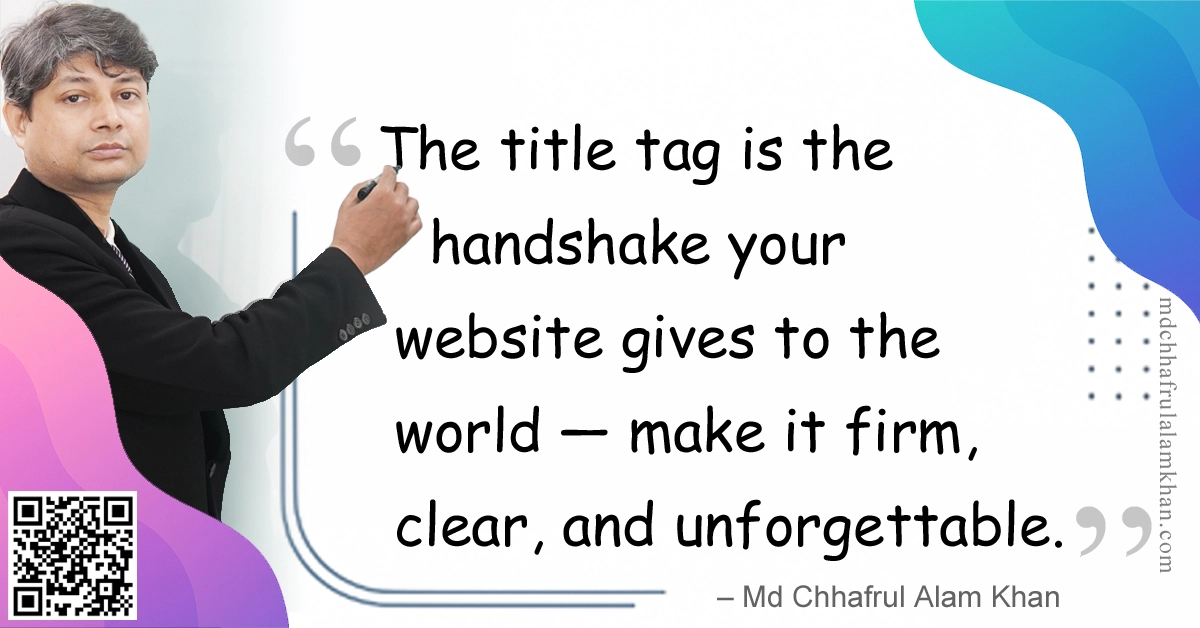
“The title tag is the handshake your website gives to the world — make it firm, clear, and unforgettable.”
– Md Chhafrul Alam Khan
🧭 What is a Title Tag?
A title tag is an HTML element that defines the title of a webpage.
It appears in three key places:
- Search Engine Results Pages (SERPs) — as the clickable blue headline.
- Browser Tabs — helping users identify open pages.
- Social Media & Messaging Previews — when links are shared.
Example in HTML:
<title>Best Vegan Protein Powders | Healthy Living</title>
This short line of code tells both search engines and people what the page is about.
🎯 Why Title Tags Matter
- Primary Ranking Factor
Search engines use title tags to understand page relevance. - Boosts Click-Through Rates (CTR)
A compelling title draws more clicks from search results. - Improves User Experience
Clear titles set accurate expectations for visitors. - Essential for AI Search
Answer engines and AI summaries use titles as anchor context.
📊 Anatomy of a Perfect Title Tag
| Element | Why It Matters | Example |
|---|---|---|
| Primary Keyword | Signals relevance to search engines | “Vegan Protein Powder” |
| Secondary Keyword | Broadens reach without keyword stuffing | “Plant-Based Nutrition” |
| Brand Name | Builds recognition and trust | “Healthy Living” |
| Emotional Hook | Encourages clicks through curiosity or urgency | “Discover the Best” |
| Length Control | Ensures visibility without truncation | Keep within 50–60 characters |
📌 Best Practices for Title Tag Optimization
✅ 1. Place Primary Keyword Early
Search engines weigh the first few words more heavily.
Example:<title>Vegan Protein Powders for Athletes | Healthy Living</title>
✅ 2. Maintain Natural Readability
Avoid robotic keyword lists — write for humans first.
✅ 3. Match Search Intent
If users want “buy,” “guide,” or “compare,” reflect it in the title.
✅ 4. Avoid Duplicate Titles
Each page should have a unique title to prevent confusion.
✅ 5. Test for CTR
Use tools like Google Search Console to monitor performance.
💼 Mini Case Study: Small Change, Big Results
A travel blog had the title:
❌ “Travel Blog – Europe”
After optimization:
✅ “Europe Travel Guide: Top 20 Cities You Must Visit”
Results in 30 days:
📈 CTR improved by 64%
📈 Page impressions increased due to better keyword targeting
🛠 Tools for Title Tag Optimization
| Tool | Purpose |
|---|---|
| Google Search Console | Check CTR and impressions |
| Ahrefs / SEMrush | Find keyword opportunities |
| Yoast SEO / Rank Math | Optimize titles in WordPress |
| SERPsim | Preview how your title looks in search |
| A/B Testing Tools | Experiment with title variations |
⚠️ Common Mistakes to Avoid
❌ Stuffing multiple keywords with no readability
❌ Using vague titles like “Home” or “Welcome”
❌ Repeating the same title across pages
❌ Ignoring brand tone or audience appeal
💡 Pro Tips from My Experience
💎 Pro Tip 1: Use numbers and power words (“best,” “top,” “ultimate”) to drive clicks.
💎 Pro Tip 2: Refresh title tags periodically to match updated content.
💎 Pro Tip 3: Check mobile SERP previews — mobile often truncates titles earlier.
🧠 FAQs on Title Tag Optimization
Q1: Can I use the same title tag for multiple pages?
A: No. Duplicate titles confuse search engines and dilute ranking potential.
Q2: How many keywords should I include?
A: Focus on 1 primary + 1 secondary keyword, written naturally.
Q3: Does the order of keywords matter?
A: Yes — more important keywords should appear earlier.
Learn> >On-Page SEO >Off-Page SEO >Technical SEO >Local SEO >Next-Gen SEO
Remember:
“SEO is a journey, not a destination.”
– Md Chhafrul Alam Khan
Next Step 🚀
Master SEO from Beginner to Expert with our Free Online Self-Learning Course on SEO Mastery.
Learn> >On-Page SEO >Off-Page SEO >Technical SEO >Local SEO >Next-Gen SEO
Leave a Reply