
On-Page SEO Fundamentals↴
Core HTML & Metadata Optimization
>Title Tag Optimization
>Meta Description Optimization
>Meta Robots Tag Optimization
>Canonical URL Optimization
>Meta Charset Tag Optimization
>Viewport Meta Tag Optimization
Heading Structure Optimization
>Heading Tag H1 Optimization
>Heading Tags H2–H6 Optimization
>Heading Structure Best Practices
Content Optimization
>Keyword Targeting in Content
>Content Structure & Readability
>Content Depth & Word Count
>Multimedia Optimization
>Content Freshness & Updates
Internal Linking Optimization
>Internal Link Structure
>Anchor Text Optimization
>Fixing Orphan Pages
URL & Slug Optimization
Image Optimization
>Image File Naming for SEO
>Image Compression & Formats
>Image Alt Text & Title Attributes
Schema Markup & Structured Data
>Schema Markup Overview
>Common Schema Types
>Testing & Validating Schema
External & Outbound Links
>Outbound Link Quality & Relevance
>Nofollow, Sponsored & UGC Attributes
Page Experience & Engagement
>Core Web Vitals Optimization
>Mobile Friendliness
>Accessibility Standards for SEO
Crawl & Indexing Controls (On-Page)
Content Depth & Word Count: Finding the Perfect Balance for SEO & User Value

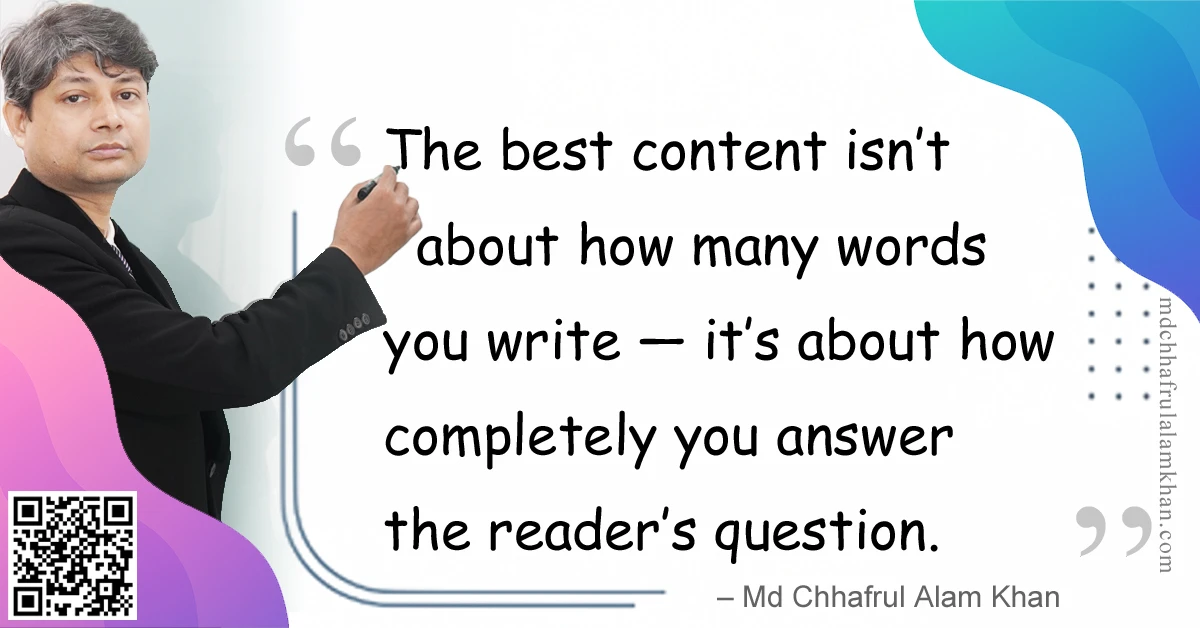
“The best content isn’t about how many words you write — it’s about how completely you answer the reader’s question.”
– Md Chhafrul Alam Khan
🧭 What Is Content Depth & Word Count?
- Content depth refers to how thoroughly a topic is covered, including subtopics, examples, data, and actionable steps.
- Word count is simply the number of words in a piece of content.
In modern SEO, word count alone isn’t a ranking factor — but depth is. A longer article can perform better if every word adds value.
🎯 Why Content Depth & Word Count Matter
- User Satisfaction
- Visitors stay longer when you fully answer their question.
- Search Engine Understanding
- Depth helps Google connect your page to related topics and queries.
- Topical Authority
- Detailed content signals expertise in your niche.
- AEO & GEO Benefits
- AI-driven engines prefer well-structured, comprehensive answers.
- Competitive Edge
- In-depth content can outperform competitors with thin coverage.
📌 How to Determine the Right Word Count
✅ 1. Check Search Intent
- Informational queries → often 1,500–3,000 words.
- Transactional queries → 800–1,500 words.
- Local SEO pages → 500–1,000 words.
✅ 2. Analyze Competitors
- Use SEO tools (Ahrefs, SEMrush) to check top-ranking word counts.
- Match or exceed the depth — not just the length.
✅ 3. Focus on Completeness
- Cover all subtopics and related FAQs.
- Use lists, tables, and visuals to enrich content.
📊 Example Word Count Ranges by Content Type
| Content Type | Average Range | Notes |
|---|---|---|
| Blog Posts (SEO-focused) | 1,500–3,000 words | Depth matters more than length |
| Product Pages | 300–800 words | Clear, benefit-driven copy |
| Landing Pages | 500–1,500 words | Focus on conversion elements |
| Pillar Pages | 3,000–6,000 words | Comprehensive coverage |
| News/Updates | 300–800 words | Short, timely, factual |
🛠 Tools to Measure Depth & Word Count
| Tool | Purpose |
|---|---|
| Surfer SEO | Suggests ideal word count based on SERP data |
| Frase.io | Content depth analysis |
| Ahrefs Content Gap | Finds missing subtopics |
| Google Docs | Basic word count check |
| Hemingway Editor | Improves clarity alongside depth |
⚠️ Common Mistakes to Avoid
❌ Fluff to increase word count — Adds no real value.
❌ Thin content — Covers topic too lightly.
❌ Ignoring reader intent — Overexplaining irrelevant points.
❌ One-size-fits-all approach — Not all pages need long-form content.
💡 Pro Tips from My Experience
💎 Pro Tip 1: Think in terms of topics, not words — aim to become the best answer on the internet for that query.
💎 Pro Tip 2: Add supporting media — infographics, videos, and diagrams — to increase depth without making text overwhelming.
💎 Pro Tip 3: Refresh and expand older content to keep depth and relevance strong.
🧠 FAQs on Content Depth & Word Count
Q1: Does longer content always rank better?
A: No. It ranks better only if it’s relevant, in-depth, and satisfies search intent.
Q2: Should I update old content to increase word count?
A: Yes, but focus on adding value, not just words.
Q3: How can I measure content depth?
A: Check if your content answers all related questions and includes examples, visuals, and references.
Learn> >On-Page SEO >Off-Page SEO >Technical SEO >Local SEO >Next-Gen SEO
Remember:
“SEO is a journey, not a destination.”
– Md Chhafrul Alam Khan
Next Step 🚀
Master SEO from Beginner to Expert with our Free Online Self-Learning Course on SEO Mastery.
Learn> >On-Page SEO >Off-Page SEO >Technical SEO >Local SEO >Next-Gen SEO
Leave a Reply