
SEO↴
⚙️ Technical SEO: The Invisible Powerhouse Behind Your Rankings (Present & Beyond)

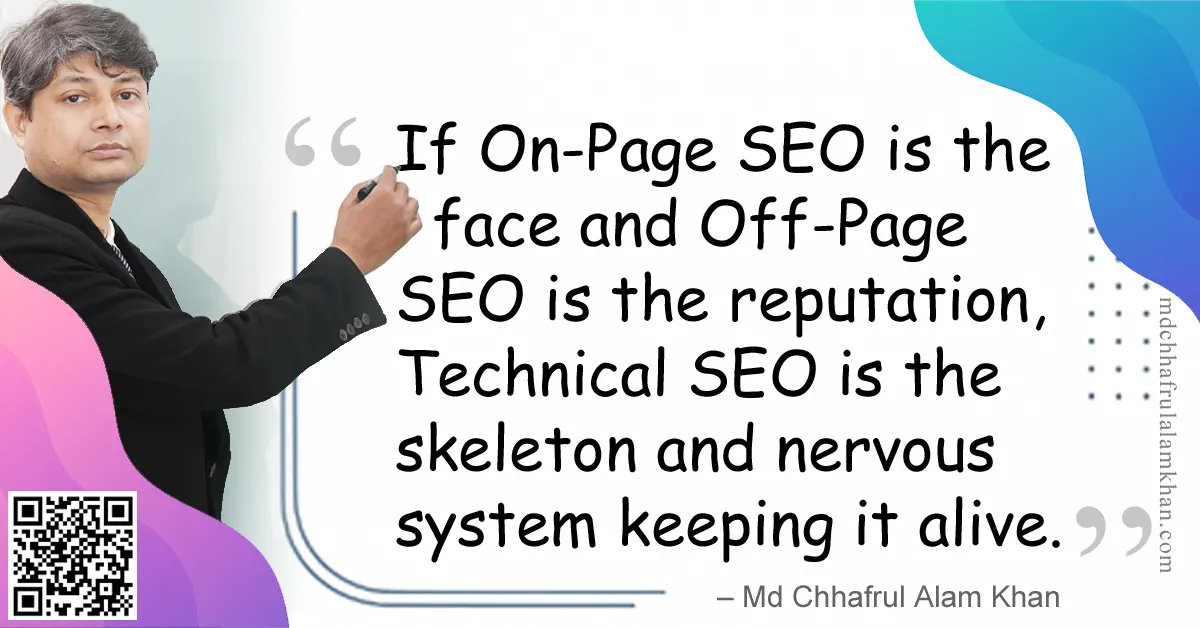
“If On-Page SEO is the face and Off-Page SEO is the reputation, Technical SEO is the skeleton and nervous system keeping it alive.”
– Md Chhafrul Alam Khan
🧭 What is Technical SEO?
Technical SEO is the process of optimizing the backend and infrastructure of your website so search engines can crawl, index, and rank it effectively.
It focuses on performance, structure, and accessibility, ensuring your site works perfectly for:
- Search engine bots 🤖
- Real human users 🧑💻
- AI & voice assistants 🎙️
🎯 Why Technical SEO Matters
Without good Technical SEO:
- Search engines may not find or index your pages
- Pages may load too slowly, hurting rankings and conversions
- Your content may be ignored by AI-generated search results
- You may lose mobile users instantly due to bad UX
✅ Good Technical SEO = Healthy Website + Higher Visibility
🧩 The Core Components of Technical SEO
1. Website Crawlability
- Ensure search engine bots can access your site
- Use robots.txt to guide crawlers
- Submit XML sitemaps to Google Search Console and Bing Webmaster Tools
2. Website Indexing
- Use noindex tags for pages you don’t want in search
- Ensure important pages are indexable
- Avoid duplicate content issues with canonical tags
3. Site Architecture
- Use a clear, logical structure
- Keep important pages within 3 clicks from the homepage
- Use breadcrumb navigation
4. Mobile-Friendliness
- Google uses mobile-first indexing
- Test with Google’s Mobile-Friendly Test Tool
- Use responsive design
5. Page Speed & Core Web Vitals
- Aim for:
- LCP (Largest Contentful Paint) < 2.5s
- FID (First Input Delay) < 100ms
- CLS (Cumulative Layout Shift) < 0.1
- Compress images (WebP format recommended)
- Minify CSS, JavaScript
- Use a CDN (Content Delivery Network)
6. HTTPS & Security
- Install an SSL certificate (HTTPS)
- Secure your site from malware
- Enable HSTS (HTTP Strict Transport Security)
7. Structured Data (Schema Markup)
- Add schema to:
- Articles
- Products
- FAQs
- Events
- Helps with rich snippets in SERPs
8. URL Structure
- Keep URLs short, readable, and keyword-rich
- Use hyphens (
-) not underscores (_) - Avoid unnecessary parameters
9. Fix Broken Links & Redirects
- Use 301 redirects for moved pages
- Remove or fix 404 errors
- Audit regularly with Screaming Frog or Ahrefs
10. XML Sitemap Optimization
- Keep it clean and updated
- Include only indexable URLs
- Submit to search engines
11. Duplicate Content Prevention
- Use canonical tags
- Avoid printing the same content across multiple URLs
12. International SEO (Hreflang Tags)
- For multi-language/multi-country sites
- Tells search engines the correct language version
13. AMP (Accelerated Mobile Pages)
- Optional for speed-boosting news/blog sites
- Not essential for all, but can improve mobile performance
🔑 Technical SEO Audit Checklist
| Task | Frequency | Tool Recommendation |
|---|---|---|
| Crawl site | Monthly | Screaming Frog |
| Check indexing | Monthly | Google Search Console |
| Test page speed | Monthly | PageSpeed Insights, GTmetrix |
| Check mobile-friendliness | Quarterly | Google Mobile Test |
| Fix broken links | Monthly | Ahrefs, Broken Link Checker |
| Update sitemap | Ongoing | XML Sitemap Generator |
| Review schema markup | Quarterly | Schema.org, Rich Results Test |
| Monitor security | Weekly | Sucuri, Wordfence |
🛠️ Best Tools for Technical SEO
| Tool | Use Case |
|---|---|
| Google Search Console | Indexing, errors, coverage |
| Bing Webmaster Tools | Indexing for Bing/Yahoo |
| Screaming Frog SEO Spider | Crawling, finding issues |
| Ahrefs Site Audit | Backlink + technical health |
| SEMrush Site Audit | Comprehensive health check |
| GTmetrix / Pingdom | Speed testing |
| PageSpeed Insights | Core Web Vitals analysis |
| Sitebulb | Visual crawl reports |
| Cloudflare CDN | Speed and security |
| Sucuri / Wordfence | Security protection |
⚠️ Common Technical SEO Mistakes
❌ Blocking search engines with robots.txt accidentally
❌ Not using HTTPS
❌ Overly complex site structure
❌ Ignoring mobile optimization
❌ Slow-loading pages
❌ Duplicate content without canonical tags
❌ Missing sitemap or submitting broken URLs
❌ Not fixing broken links
📈 Technical SEO & AI Visibility (AEO + GEO)
Good Technical SEO ensures:
- AI bots can easily parse your content
- Schema helps AI understand your content’s meaning
- Clean structure improves answer extraction for voice & AI search
- Fast-loading, mobile-optimized pages rank higher in AI-driven results
🧠 FAQs on Technical SEO
Q1: Is Technical SEO more important than content?
A: Without technical optimization, even great content can be invisible to search engines.
Q2: Do I need to hire a developer for Technical SEO?
A: Not always. Many issues can be fixed with SEO plugins like Rank Math or Yoast.
Q3: How often should I do a Technical SEO audit?
A: At least quarterly — monthly for large or eCommerce sites.
Q4: Is AMP still necessary in 2025?
A: Optional — modern mobile optimization often removes the need for AMP.
Q5: Can Technical SEO alone get me ranked #1?
A: No — it must work with On-Page and Off-Page SEO.
Remember:
“SEO is a journey, not a destination.”
– Md Chhafrul Alam Khan
Next Step 🚀
Master SEO from Beginner to Expert with our Free Online Self-Learning Course on SEO Mastery.
You might like↴
- Content Creation Checklist (CCC)
- SEO Encyclopedia
- What Is SEO – Search Engine Optimization? [A Comprehensive Guide]
- How to Become an SEO Expert? A Step-by-Step Guide
- SEO Starter Guide: From Web Whispers to Search Engine Screams
- On-Page SEO Overview
- Title Tag Optimization
- Meta Description Optimization
- Meta Robots Tag Optimization
- Canonical URL Optimization
- Viewport Meta Tag Optimization
- Heading Tag H1 Optimization
- Heading Tags H2–H6 Optimization
- Heading Structure Best Practices
- Keyword Targeting in Content
- Content Structure & Readability
- Content Depth & Word Count
- Multimedia Optimization
- Content Freshness & Updates
- Internal Link Structure
- Anchor Text Optimization
- Fixing Orphan Pages
- SEO-Friendly URL Structure
- URL Parameters & Tracking Codes
- Image File Naming for SEO
- Image Compression & Formats
- Image Alt Text & Title Attributes
- Schema Markup Overview
- Common Schema Types
- Testing & Validating Schema
- Outbound Link Quality & Relevance
- Nofollow, Sponsored & UGC Attributes
- Core Web Vitals Optimization
- Mobile Friendliness
- Accessibility Standards for SEO
- Robots Meta Tag Usage
- Hreflang Implementation
- Manual On-Page SEO Audit Checklist
- On-Page SEO Tools & Software
- Competitor On-Page SEO Analysis
- Technical SEO
- Meta Charset Tag Optimization
- Pagination SEO
- Google Search Algorithm
- The future of SEO in a ChatGPT-dominated world
- SEO Mastery: Complete Course Content
- Lesson 01: What is SEO and Why Does It Matter?
- Lesson 02: Keyword Research Made Simple
- Lesson 03: On-Page SEO Basics
- Lesson 04: Technical SEO
Leave a Reply