
On-Page SEO Fundamentals↴
Core HTML & Metadata Optimization
>Title Tag Optimization
>Meta Description Optimization
>Meta Robots Tag Optimization
>Canonical URL Optimization
>Meta Charset Tag Optimization
>Viewport Meta Tag Optimization
Heading Structure Optimization
>Heading Tag H1 Optimization
>Heading Tags H2–H6 Optimization
>Heading Structure Best Practices
Content Optimization
>Keyword Targeting in Content
>Content Structure & Readability
>Content Depth & Word Count
>Multimedia Optimization
>Content Freshness & Updates
Internal Linking Optimization
>Internal Link Structure
>Anchor Text Optimization
>Fixing Orphan Pages
URL & Slug Optimization
Image Optimization
>Image File Naming for SEO
>Image Compression & Formats
>Image Alt Text & Title Attributes
Schema Markup & Structured Data
>Schema Markup Overview
>Common Schema Types
>Testing & Validating Schema
External & Outbound Links
>Outbound Link Quality & Relevance
>Nofollow, Sponsored & UGC Attributes
Page Experience & Engagement
>Core Web Vitals Optimization
>Mobile Friendliness
>Accessibility Standards for SEO
Crawl & Indexing Controls (On-Page)
Content Structure & Readability: Making Your Pages a Pleasure to Read

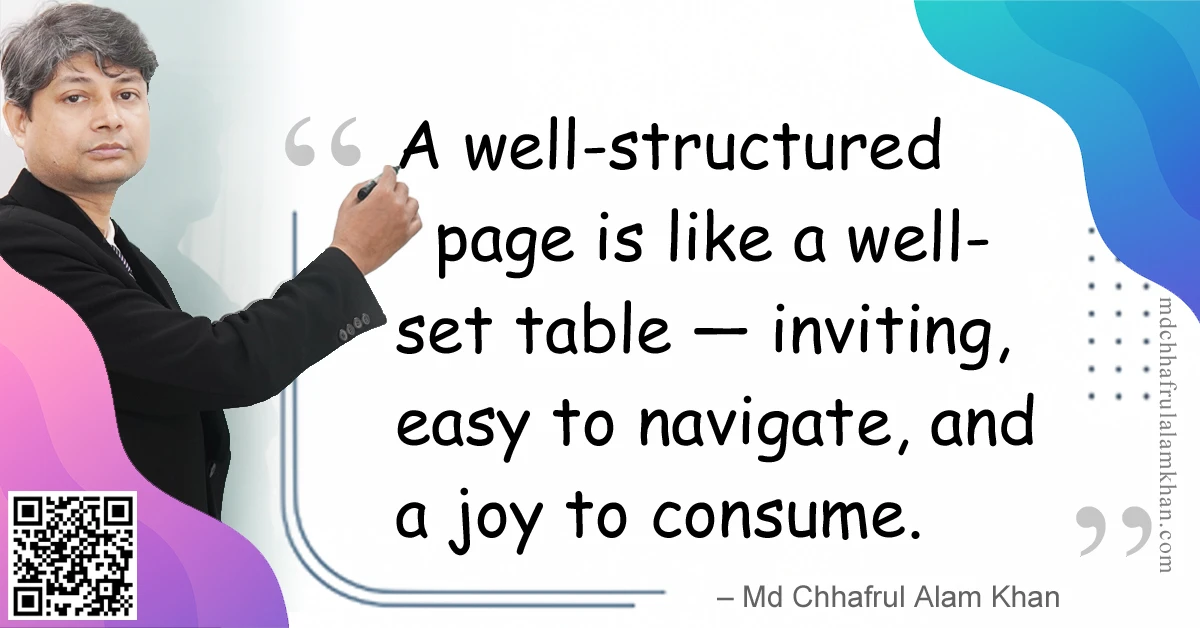
“A well-structured page is like a well-set table — inviting, easy to navigate, and a joy to consume.”
– Md Chhafrul Alam Khan
🧭 What Is Content Structure & Readability?
Content structure is how your page is organized and visually presented, while readability measures how easily readers can understand and engage with it.
In SEO terms, both are critical for keeping visitors on your page, guiding them through your content, and helping search engines interpret it correctly.
🎯 Why Content Structure & Readability Matter
- Improves User Experience (UX)
Well-structured content feels effortless to read. - Reduces Bounce Rate
When content is scannable, visitors stay longer. - Boosts SEO Signals
Search engines reward organized, well-presented content. - Supports Accessibility
Clear headings, paragraphs, and spacing make your content more inclusive. - Enhances AEO & GEO Impact
Structured text improves how AI-driven engines extract and summarize your content.
📌 The Core Elements of Strong Content Structure
✅ 1. Logical Flow
- Use intro → body → conclusion structure.
- Follow a natural progression that answers user queries step-by-step.
✅ 2. Headings Hierarchy (H1–H6)
- One H1 per page (main topic).
- Use H2 for sections, H3 for subsections, and so on.
✅ 3. Short Paragraphs
- 2–4 sentences per paragraph for better scanning.
- Avoid long walls of text.
✅ 4. Bulleted & Numbered Lists
- Perfect for breaking down points, processes, and tips.
✅ 5. White Space & Visual Breaks
- Use spacing, images, and dividers to avoid visual fatigue.
✅ 6. Internal Linking
- Guide readers to related pages and keep them on your site longer.
📊 Readability Optimization Techniques
| Technique | Why It Works | Example |
|---|---|---|
| Short Sentences | Easier to digest | Instead of: “The reason that many people…” → “Many people…” |
| Active Voice | Direct and engaging | “We deliver results” vs “Results are delivered by us” |
| Plain Language | Accessible to wider audience | “Use” instead of “utilize” |
| Transitional Phrases | Smooth flow between ideas | “However,” “As a result,” “For example” |
| Highlighting | Draws attention to key points | Bold important terms or statistics |
🛠 Tools to Measure Readability
| Tool | Purpose |
|---|---|
| Hemingway Editor | Checks sentence complexity & grade level |
| Grammarly | Grammar, tone, and clarity suggestions |
| Yoast SEO | Readability scoring inside WordPress |
| Readable.com | Multi-metric readability checks |
⚠️ Common Mistakes to Avoid
❌ Overcomplicating Language — using jargon without explanation.
❌ Poor Formatting — no headings, long paragraphs, no lists.
❌ Inconsistent Style — mixing tones and writing patterns.
❌ Ignoring Mobile Users — not optimizing for small screens.
💡 Pro Tips from My Experience
💎 Pro Tip 1: Use the inverted pyramid style — lead with the most important info first.
💎 Pro Tip 2: Preview your content on both desktop and mobile before publishing.
💎 Pro Tip 3: Combine text with visuals (images, charts, infographics) to enhance engagement.
🧠 FAQs on Content Structure & Readability
Q1: What’s the ideal reading grade level for web content?
A: Aim for Grade 6–8 for most audiences, unless targeting technical readers.
Q2: How often should I use headings?
A: Every 200–300 words, or whenever the topic shifts.
Q3: Does readability affect SEO directly?
A: Not directly as a ranking factor, but it strongly influences engagement metrics that affect rankings.
Learn> >On-Page SEO >Off-Page SEO >Technical SEO >Local SEO >Next-Gen SEO
Remember:
“SEO is a journey, not a destination.”
– Md Chhafrul Alam Khan
Next Step 🚀
Master SEO from Beginner to Expert with our Free Online Self-Learning Course on SEO Mastery.
Learn> >On-Page SEO >Off-Page SEO >Technical SEO >Local SEO >Next-Gen SEO
Leave a Reply