
On-Page SEO Fundamentals↴
Core HTML & Metadata Optimization
>Title Tag Optimization
>Meta Description Optimization
>Meta Robots Tag Optimization
>Canonical URL Optimization
>Meta Charset Tag Optimization
>Viewport Meta Tag Optimization
Heading Structure Optimization
>Heading Tag H1 Optimization
>Heading Tags H2–H6 Optimization
>Heading Structure Best Practices
Content Optimization
>Keyword Targeting in Content
>Content Structure & Readability
>Content Depth & Word Count
>Multimedia Optimization
>Content Freshness & Updates
Internal Linking Optimization
>Internal Link Structure
>Anchor Text Optimization
>Fixing Orphan Pages
URL & Slug Optimization
Image Optimization
>Image File Naming for SEO
>Image Compression & Formats
>Image Alt Text & Title Attributes
Schema Markup & Structured Data
>Schema Markup Overview
>Common Schema Types
>Testing & Validating Schema
External & Outbound Links
>Outbound Link Quality & Relevance
>Nofollow, Sponsored & UGC Attributes
Page Experience & Engagement
>Core Web Vitals Optimization
>Mobile Friendliness
>Accessibility Standards for SEO
Crawl & Indexing Controls (On-Page)
Competitor On-Page SEO Analysis: Learning from the Best (and Beating Them)

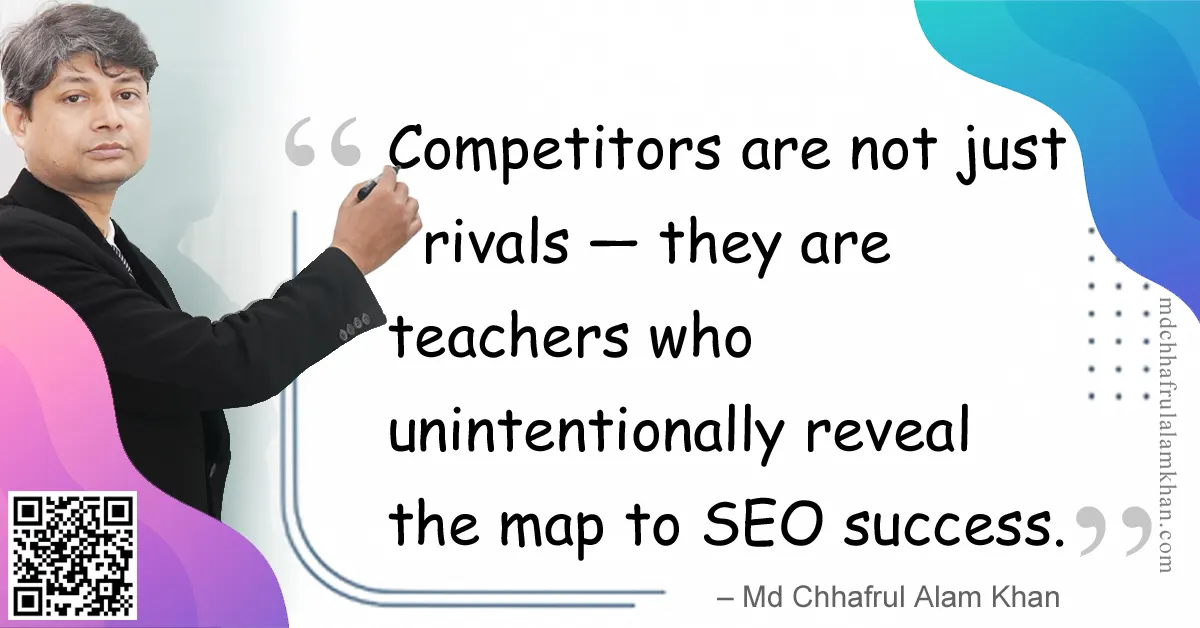
“Competitors are not just rivals — they are teachers who unintentionally reveal the map to SEO success.”
– Md Chhafrul Alam Khan
🧭 What is Competitor On-Page SEO Analysis?
A competitor on-page SEO analysis is the process of studying top-ranking websites in your niche to identify:
- What keywords they target
- How they structure content
- Which on-page elements they optimize
- Where their weaknesses leave room for you to outrank them
By reverse-engineering their strategy, you can borrow what works, avoid their mistakes, and create superior content.
🎯 Why Competitor Analysis Matters
- Shortcut to Strategy
- Competitors have already tested what works — you learn without trial & error.
- Identify Gaps
- Spot opportunities where they miss keywords, topics, or optimization.
- Benchmark Quality
- Compare your word count, media use, and content depth.
- Stay Ahead
- Monitor changes in their strategy and update yours accordingly.
- Boost SEO ROI
- Directly invest effort in proven areas instead of guessing.
📊 Key Elements to Analyze
🔑 1. Keywords & Intent
- Primary & secondary keywords they rank for
- Search intent (informational, navigational, transactional)
- Long-tail vs short-tail keyword usage
🏗 2. Content Structure
- Heading hierarchy (H1, H2, H3 usage)
- Depth of explanation (shallow vs comprehensive)
- Use of lists, tables, FAQs
🖼 3. Multimedia Optimization
- Images, videos, infographics included?
- Proper alt text & captions?
- Load speed impact?
🔗 4. Internal & External Linking
- How they interlink related posts
- Quality of outbound references (authoritative vs weak)
📐 5. Technical On-Page Factors
- Title tag & meta description optimization
- Schema markup presence
- Core Web Vitals performance
🛠 Tools for Competitor On-Page SEO Analysis
| Tool | What It Helps With |
|---|---|
| Ahrefs / SEMrush | Keyword rankings, content gaps |
| Screaming Frog | Full site crawl to study structure |
| SurferSEO / Clearscope | Content optimization comparison |
| Google Search Console (Competitor URL Check) | Indexed pages & snippets |
| SimilarWeb | Traffic source estimation |
📌 Step-by-Step Process
✅ Step 1: Identify Competitors
Search your target keywords and note the top 10 ranking sites.
✅ Step 2: Analyze Content Depth
Check their word count, readability, and multimedia use.
✅ Step 3: Study On-Page Elements
Review title, meta description, headings, schema, alt text.
✅ Step 4: Spot Content Gaps
Find topics they didn’t cover that your audience still needs.
✅ Step 5: Build Superior Content
Create an article that is longer, clearer, richer, and more up-to-date.
⚠️ Common Mistakes in Competitor Analysis
❌ Copying competitor content word-for-word (leads to duplicate content issues)
❌ Focusing only on keywords instead of user intent
❌ Ignoring their weaknesses (these are your biggest opportunities)
❌ Over-analyzing without taking action
📈 SEO Benefits of Competitor Analysis
- Faster Rankings → Build on proven success
- Better Content Quality → Improve user experience
- Smarter Keyword Targeting → Fill gaps others miss
- Sustained Growth → Stay competitive in evolving SERPs
🧠 FAQs on Competitor On-Page SEO
Q1: Should I analyze only direct competitors?
A: No — also study content leaders even outside your niche (big publishers, blogs).
Q2: How often should competitor analysis be done?
A: At least quarterly, or when planning major content updates.
Q3: What if my competitor uses paid tools I don’t have access to?
A: Use free trial versions or focus on free tools like Ubersuggest and Google SERPs for insights.
Learn> >On-Page SEO >Off-Page SEO >Technical SEO >Local SEO >Next-Gen SEO
Remember:
“SEO is a journey, not a destination.”
– Md Chhafrul Alam Khan
Next Step 🚀
Master SEO from Beginner to Expert with our Free Online Self-Learning Course on SEO Mastery.
Learn> >On-Page SEO >Off-Page SEO >Technical SEO >Local SEO >Next-Gen SEO
Leave a Reply