
📖 Digital Marketing Encyclopedia – Chapter 40
Entity Search Optimization (ESO) — also known as Entity-Based Marketing & Knowledge Graphs

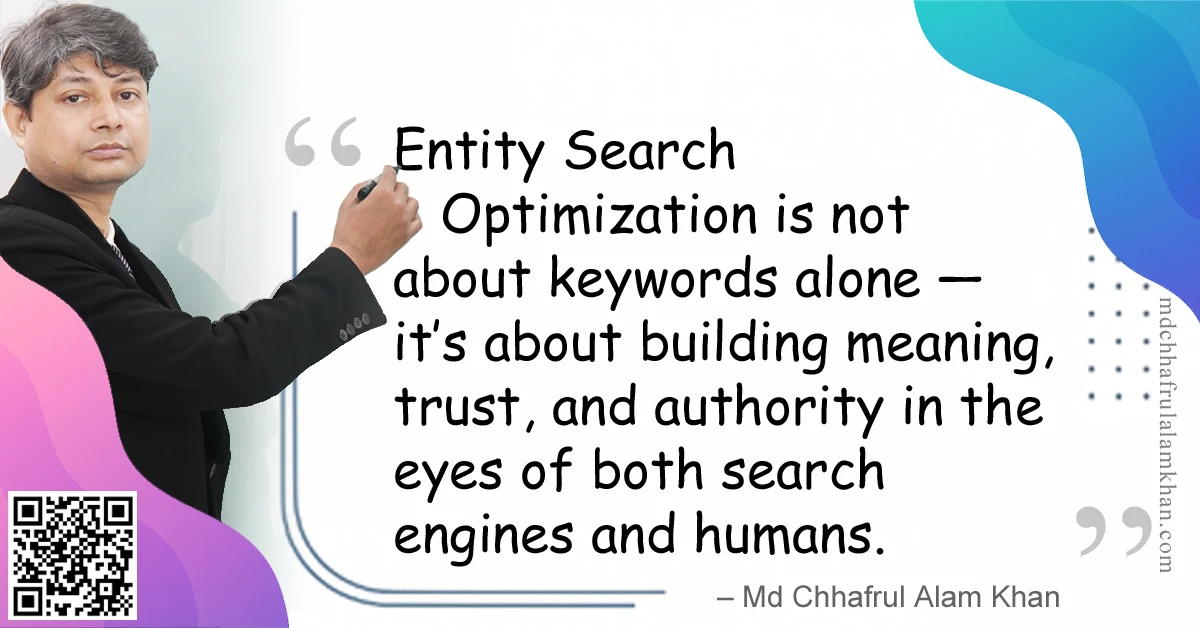
“Entity Search Optimization is not about keywords alone — it’s about building meaning, trust, and authority in the eyes of both search engines and humans.”
– Md Chhafrul Alam Khan
Introduction
Entity Search Optimization (ESO) is the evolution of SEO, where the focus shifts from keywords to entities — people, places, organizations, products, and concepts that search engines recognize in their Knowledge Graphs.
While many professionals call this approach Entity-Based Marketing, ESO emphasizes the technical and strategic process of ensuring that your brand, products, and leaders are recognized as verified entities.
Search engines like Google no longer just read text — they understand context and relationships. ESO ensures your digital presence is future-ready for AI-driven search, generative engines, and knowledge graphs.
🔎 What is Entity Search Optimization (ESO)?
- Entity → A uniquely identifiable concept (brand, product, person, place).
- Knowledge Graph → Google’s structured database that connects entities and their relationships.
- ESO → Optimization that ensures brands, products, and individuals are recognized as trusted entities across digital ecosystems.
In short: ESO = the foundation of being recognized, not just ranked.
🧩 Core Elements of ESO & Knowledge Graphs
Entity Creation & Recognition
- Define a clear brand identity.
- Ensure presence in authoritative sources (Wikipedia, Wikidata, Crunchbase, LinkedIn).
- Use consistent brand name, logo, and descriptions across platforms.
Structured Data (Schema Markup)
- Apply schema for Organization, Person, Product, FAQ, and Reviews.
- Helps search engines “understand” your brand as an entity.
Citations & Mentions
- Appear in trusted news sites, directories, PR articles, and blogs.
- Build credibility with consistent mentions and backlinks.
Content Relationships
- Use topic clusters and pillar content to connect ideas.
- Strengthen your entity’s association with industries, products, and expertise areas.
Authority Building
- Verified social profiles + Google Knowledge Panel.
- Reputation signals: reviews, digital PR, influencer mentions.
- Consistent content across all touchpoints.
📊 Example: ESO in the Customer Journey
| Stage | ESO Strategy | Purpose |
|---|---|---|
| Awareness | Knowledge Graph recognition | Boost visibility in search & panels |
| Consideration | Verified mentions & citations | Build brand credibility |
| Conversion | Product schema + entity validation | Drive purchase confidence |
| Retention | Consistent branding across channels | Strengthen customer trust |
| Advocacy | Authority signals (PR & reviews) | Turn customers into promoters |
🎯 Benefits of ESO & Knowledge Graphs
- Future-Proof SEO → AI and search rely on entities, not keywords.
- Higher Visibility → Appear in Knowledge Panels, entity cards, and snippets.
- Brand Authority → Verified identity builds instant recognition and trust.
- Content Relevance → Better alignment with user intent and semantic search.
- Cross-Channel Strength → Entity signals flow into SEO, social, and AI engines.
- Competitive Edge → Few brands optimize entities — early movers gain advantage.
🧭 Types of Entity Search Optimization Strategies
- Brand Entity Optimization → Ensure brand is verified in Knowledge Graphs.
- Personal Entity Optimization → Build thought leadership authority.
- Product & Service Entities → Use schema for product recognition in AI and search.
- Local Entities → Connect local businesses with local Knowledge Graphs.
- Topical Authority → Establish niche expertise with entity-linked content.
🛠️ Tools for ESO & Knowledge Graphs
- Structured Data → Schema.org, Google Rich Results Test
- Entity Research → Kalicube Pro, InLinks, WordLift
- Knowledge Graph Sources → Wikipedia, Wikidata, Crunchbase
- Analytics & Tracking → Google Search Console, SEMrush Entity Explorer
- Reputation Tools → Brandwatch, Mention, BuzzSumo
📊 ESO vs. Traditional SEO
| Aspect | Entity Search Optimization (ESO) | Traditional SEO |
|---|---|---|
| Focus | Entities & relationships | Keywords & backlinks |
| Search Signals | Knowledge Graph + schema | Keyword density + links |
| Authority | Verified profiles & mentions | Content + backlinks |
| Future-Readiness | AI-driven, entity-first search | Limited to classic search engines |
| Visibility | Panels, snippets, entity cards | Blue links only |
❓ Frequently Asked Questions
Q1: Do I need to be on Wikipedia for ESO?
Not mandatory, but Wikidata + other authoritative sources help significantly.
Q2: How do I know if Google recognizes my entity?
Search your brand or personal name — if a Knowledge Panel appears, your entity is recognized.
Q3: Can small businesses benefit from ESO?
Yes — local businesses can use schema, reviews, and Google Business Profile to be recognized as local entities.
Q4: Is ESO only for big brands?
No — individuals, startups, and professionals can all build entity authority.
✨ Final Thoughts
Entity Search Optimization (ESO) is the future of digital visibility.
It ensures your brand is not just ranked — it is understood, trusted, and recognized across search engines and AI-driven platforms.
“The strongest brands don’t just chase keywords — they exist as entities in the digital knowledge ecosystem.”
– Md Chhafrul Alam Khan
Want your brand to be recognized as an authority in the Knowledge Graph?
👉 Work with me to build an entity-driven strategy that secures long-term visibility and trust.
Boost Your Knowledge & Skills 🚀
Master SEO from Beginner to Expert with our Free Online Self-Learning Course on SEO Mastery.
You might like↴
- Content Creation Checklist (CCC)
- SEO Encyclopedia
- What Is SEO – Search Engine Optimization? [A Comprehensive Guide]
- How to Become an SEO Expert? A Step-by-Step Guide
- SEO Starter Guide: From Web Whispers to Search Engine Screams
- On-Page SEO Overview
- Title Tag Optimization
- Meta Description Optimization
- Meta Robots Tag Optimization
- Canonical URL Optimization
- Viewport Meta Tag Optimization
- Heading Tag H1 Optimization
- Heading Tags H2–H6 Optimization
- Heading Structure Best Practices
- Keyword Targeting in Content
- Content Structure & Readability
- Content Depth & Word Count
- Multimedia Optimization
- Content Freshness & Updates
- Internal Link Structure
- Anchor Text Optimization
- Fixing Orphan Pages
- SEO-Friendly URL Structure
- URL Parameters & Tracking Codes
- Image File Naming for SEO
- Image Compression & Formats
- Image Alt Text & Title Attributes
- Schema Markup Overview
- Common Schema Types
- Testing & Validating Schema
- Outbound Link Quality & Relevance
- Nofollow, Sponsored & UGC Attributes
- Core Web Vitals Optimization
- Mobile Friendliness
- Accessibility Standards for SEO
- Robots Meta Tag Usage
- Hreflang Implementation
- Manual On-Page SEO Audit Checklist
- On-Page SEO Tools & Software
- Competitor On-Page SEO Analysis
- Technical SEO
- Meta Charset Tag Optimization
- Pagination SEO
- Google Search Algorithm
- The future of SEO in a ChatGPT-dominated world
- SEO Mastery: Complete Course Content
- Lesson 01: What is SEO and Why Does It Matter?
- Lesson 02: Keyword Research Made Simple
- Lesson 03: On-Page SEO Basics
- Lesson 04: Technical SEO