
📖 Digital Marketing Encyclopedia – Chapter 48
AR/VR & Metaverse Marketing

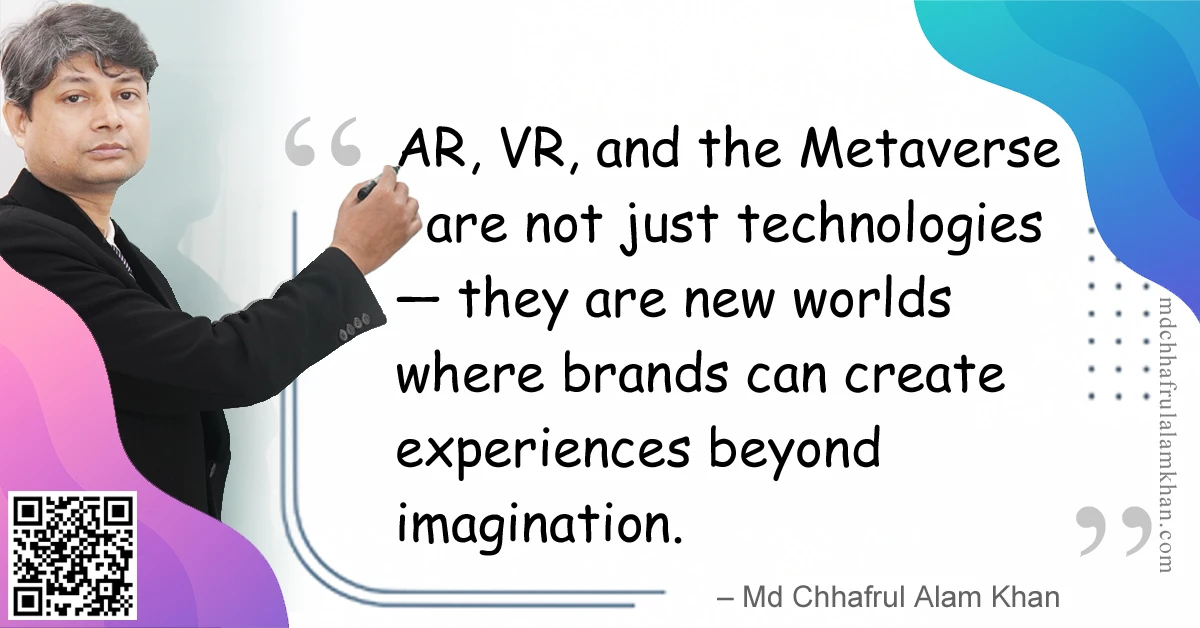
“AR, VR, and the Metaverse are not just technologies — they are new worlds where brands can create experiences beyond imagination.”
– Md Chhafrul Alam Khan
Introduction
Augmented Reality (AR), Virtual Reality (VR), and the Metaverse are transforming digital marketing into immersive, interactive experiences.
From AR-powered product try-ons to VR brand experiences and virtual stores in the Metaverse, businesses can now connect with audiences in unprecedented, multi-sensory ways.
These technologies aren’t just futuristic — they are today’s frontier of engagement, personalization, and storytelling.
🔎 What is AR/VR & Metaverse Marketing?
- AR Marketing → Enhancing real-world experiences with digital overlays (e.g., AR try-ons for fashion & beauty).
- VR Marketing → Creating fully immersive digital environments (e.g., virtual showrooms, events).
- Metaverse Marketing → Building brand presence in persistent virtual worlds (e.g., Roblox, Decentraland, Horizon Worlds).
Together, they expand how customers interact with brands beyond screens and into experiences.
🧩 Core Elements of AR/VR & Metaverse Marketing
Immersive Storytelling
- Brands create interactive stories where customers are participants.
Virtual Commerce (V-Commerce)
- Virtual stores where users shop with avatars.
- NFT-based loyalty and collectibles.
AR Try-On & Visualization
- Furniture placement apps (IKEA Place).
- AR makeup & fashion apps (L’Oréal, Sephora).
Gamification & Engagement
- Branded experiences in Roblox or Fortnite.
- Interactive events in the Metaverse.
Cross-Reality Integration
- Connect AR campaigns with e-commerce checkouts.
- Blend VR experiences with social sharing.
📊 Example: AR/VR in the Customer Journey
| Stage | AR/VR Strategy | Purpose |
|---|---|---|
| Awareness | AR ads & gamified filters | Capture attention |
| Consideration | VR demos & virtual showrooms | Build product confidence |
| Conversion | AR try-on → instant purchase | Reduce hesitation |
| Retention | Metaverse communities & events | Keep users engaged |
| Advocacy | NFT rewards & UGC campaigns | Amplify brand loyalty |
🎯 Benefits of AR/VR & Metaverse Marketing
- Immersive Engagement → Experiences customers remember.
- Higher Conversions → Try-before-you-buy reduces returns.
- Stronger Loyalty → Exclusive virtual rewards build community.
- Brand Differentiation → Stand out as an innovator.
- Global Reach → Virtual worlds break geographic barriers.
- Future-Proofing → Positions brands in emerging digital ecosystems.
🧭 Types of AR/VR & Metaverse Strategies
- AR Filters & Lenses (Instagram, Snapchat, TikTok).
- Virtual Stores & Showrooms.
- Metaverse Brand Events (concerts, product launches).
- NFT Loyalty Programs.
- Branded Virtual Goods & Skins.
- Training & Education Experiences (VR learning environments).
🛠️ Tools for AR/VR & Metaverse Marketing
- AR Development → Spark AR, Snapchat Lens Studio, ARKit, ARCore.
- VR Development → Unity, Unreal Engine, Oculus SDK.
- Metaverse Platforms → Decentraland, Roblox, Horizon Worlds.
- NFT Tools → OpenSea, Rarible, Polygon Blockchain.
- Analytics → Meta Analytics, Unity Analytics, VR/AR heatmapping.
📊 AR/VR vs. Traditional Marketing
| Aspect | AR/VR & Metaverse | Traditional Marketing |
|---|---|---|
| Engagement | Interactive, immersive | Passive, one-way |
| Reach | Virtual, global | Regional/physical |
| Conversion | Try-before-buy, immersive demos | Static ads, basic CTAs |
| Customer Role | Active participants | Passive viewers |
| Differentiation | High (innovative, futuristic) | Low (commonplace) |
❓ Frequently Asked Questions
Q1: Is AR/VR marketing expensive?
Costs are dropping — tools like Spark AR and Roblox make it affordable for small brands too.
Q2: Is the Metaverse hype or reality?
It’s evolving — early adopters are already building strong communities.
Q3: Can AR/VR boost e-commerce?
Yes — AR try-ons and VR showrooms increase trust and reduce returns.
Q4: Do NFTs matter in marketing?
Yes — they enable digital ownership, loyalty rewards, and exclusivity.
✨ Final Thoughts
AR, VR, and the Metaverse redefine how brands connect with customers.
They transform transactions into experiences, making marketing not just seen — but felt.
“The strongest brands don’t just tell stories — they create worlds where customers live those stories.”
– Md Chhafrul Alam Khan
Want to future-proof your marketing with AR, VR, and Metaverse strategies?
👉 Work with me to create immersive experiences that engage and inspire.
Boost Your Knowledge & Skills 🚀
Master SEO from Beginner to Expert with our Free Online Self-Learning Course on SEO Mastery.
You might like↴
- Content Creation Checklist (CCC)
- SEO Encyclopedia
- What Is SEO – Search Engine Optimization? [A Comprehensive Guide]
- How to Become an SEO Expert? A Step-by-Step Guide
- SEO Starter Guide: From Web Whispers to Search Engine Screams
- On-Page SEO Overview
- Title Tag Optimization
- Meta Description Optimization
- Meta Robots Tag Optimization
- Canonical URL Optimization
- Viewport Meta Tag Optimization
- Heading Tag H1 Optimization
- Heading Tags H2–H6 Optimization
- Heading Structure Best Practices
- Keyword Targeting in Content
- Content Structure & Readability
- Content Depth & Word Count
- Multimedia Optimization
- Content Freshness & Updates
- Internal Link Structure
- Anchor Text Optimization
- Fixing Orphan Pages
- SEO-Friendly URL Structure
- URL Parameters & Tracking Codes
- Image File Naming for SEO
- Image Compression & Formats
- Image Alt Text & Title Attributes
- Schema Markup Overview
- Common Schema Types
- Testing & Validating Schema
- Outbound Link Quality & Relevance
- Nofollow, Sponsored & UGC Attributes
- Core Web Vitals Optimization
- Mobile Friendliness
- Accessibility Standards for SEO
- Robots Meta Tag Usage
- Hreflang Implementation
- Manual On-Page SEO Audit Checklist
- On-Page SEO Tools & Software
- Competitor On-Page SEO Analysis
- Technical SEO
- Meta Charset Tag Optimization
- Pagination SEO
- Google Search Algorithm
- The future of SEO in a ChatGPT-dominated world
- SEO Mastery: Complete Course Content
- Lesson 01: What is SEO and Why Does It Matter?
- Lesson 02: Keyword Research Made Simple
- Lesson 03: On-Page SEO Basics
- Lesson 04: Technical SEO