
🌍 The Artificial Intelligence Encyclopedia
🕊️ AI and Human Rights — Ensuring Dignity in the Age of Automation

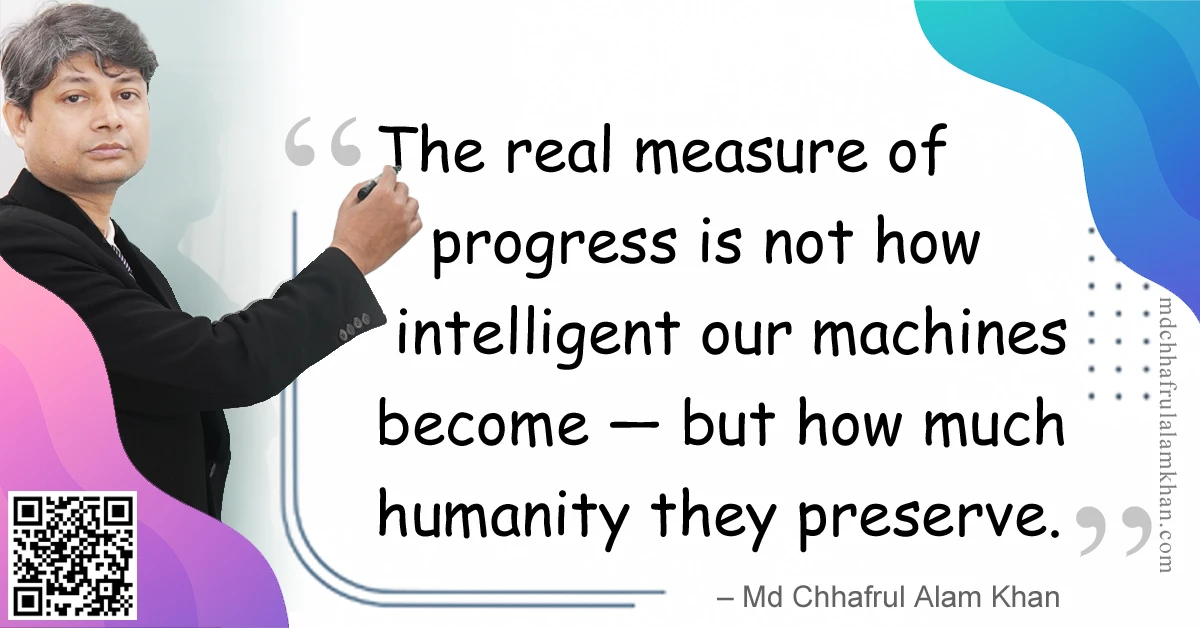
“The real measure of progress is not how intelligent our machines become — but how much humanity they preserve.”
– Md Chhafrul Alam Khan
🔹 Overview
Artificial Intelligence is transforming every aspect of human existence — from healthcare and education to work and governance. Yet, as machines take on more human roles, fundamental rights such as privacy, equality, and freedom of expression face unprecedented challenges.
AI and Human Rights explores how automation can both protect and endanger human dignity. It emphasizes that technology must always serve people — never the other way around.
This article defines the relationship between AI systems and universal human rights, presenting global principles, key risks, protective frameworks, and practical guidance for a just and ethical digital future.
🔹 1. What Are Human Rights in the Context of AI?
Human rights are the universal moral and legal entitlements every person has simply by being human — including the rights to life, liberty, privacy, education, and equal opportunity.
When AI systems make decisions about individuals, they can affect these rights directly — influencing hiring, policing, health care, access to credit, and freedom of speech.
“Technology without humanity is automation; technology with humanity is evolution.” — Md Chhafrul Alam Khan (RAJ)
🔹 2. Key Human Rights Affected by AI
| Right | Threat | Example |
|---|---|---|
| Right to Privacy | Data collection without consent | Facial recognition in public spaces |
| Right to Equality | Algorithmic bias and discrimination | Biased hiring systems rejecting candidates |
| Right to Freedom of Expression | Automated censorship and misinformation | Content moderation errors |
| Right to Work | Job displacement through automation | Industrial and service sector layoffs |
| Right to Education | Unequal access to AI learning tools | Low-income schools lacking technology |
| Right to Justice | Predictive policing or sentencing bias | AI misjudging criminal risk |
| Right to Security | Autonomous weapons and surveillance misuse | AI-powered warfare and tracking |
🔹 3. Global Human Rights Frameworks for AI
| Framework | Organization | Key Principle |
|---|---|---|
| UN Universal Declaration of Human Rights (1948) | United Nations | Core foundation for human dignity in all systems |
| UNESCO AI Ethics Recommendation (2021) | UNESCO | Human-centered AI for peace, equity, and diversity |
| Council of Europe AI & Human Rights Guide (2023) | Council of Europe | Legal safeguards for AI in justice and democracy |
| EU AI Act (2025) | European Union | Risk classification and protection from harmful AI |
| UN High Commissioner for Human Rights (OHCHR) Reports | UN | Calls for bans on opaque or rights-violating AI |
| OECD AI Principles (2023) | OECD | Accountability, fairness, and transparency globally |
These frameworks stress that human rights are the non-negotiable foundation of AI governance.
🔹 4. How AI Can Support Human Rights
- Accessibility: AI-powered tools help people with disabilities communicate and learn.
- Health Equity: Early disease detection in underserved regions.
- Justice: AI-driven legal aid platforms for faster access to information.
- Education: Personalized tutoring for disadvantaged students.
- Safety: Disaster prediction and humanitarian relief systems.
When guided ethically, AI becomes a powerful ally of human rights, not a threat.
🔹 5. Reader Benefits
- Awareness: Recognize how AI affects individual rights globally.
- Empowerment: Learn how to protect personal data and freedom.
- Advocacy: Promote human-centered AI in organizations and policy.
- Ethical Insight: Combine technical literacy with moral responsibility.
- Global Perspective: Understand AI’s social impact beyond technology.
Knowledge of rights is the first defense against digital injustice.
🔹 6. Risks and Challenges
- Surveillance Capitalism: Excessive data profiling without consent.
- Algorithmic Discrimination: AI decisions reflecting social inequality.
- Autonomous Weapons: Machines making life-or-death decisions.
- Digital Divide: Unequal access to AI tools widening global inequality.
- Loss of Human Agency: Overreliance on machine judgment.
These risks require strict policy enforcement, education, and transparency across all AI systems.
🔹 7. Global Actions to Protect Human Rights in AI
- AI Impact Assessments (AIAs) before deployment.
- Right to Explanation — individuals can ask for reasoning behind AI decisions.
- AI Transparency Labels on synthetic media and deepfakes.
- Ban on Lethal Autonomous Weapons (LAWS) under international law.
- Digital Inclusion Programs for equitable access to AI literacy.
Governments, companies, and citizens all share responsibility to protect human dignity in the age of intelligence.
🔹 8. The Future of AI and Human Dignity
- Human-in-the-Loop Governance: Mandatory human oversight for sensitive AI.
- AI Bill of Rights: Expanded global adoption ensuring privacy, fairness, and safety.
- Ethical Education: Embedding AI ethics in schools and workplaces.
- AI for Peace Programs: Technology serving diplomacy and conflict prevention.
- Cultural AI Initiatives: Protecting linguistic and artistic diversity through inclusive datasets.
The highest achievement of AI will not be surpassing human intelligence — but preserving human values.
🔹 Quick Glossary
- AI Impact Assessment (AIA): Evaluation of social and rights-based consequences of AI.
- Algorithmic Bias: Systematic unfairness in AI decision outcomes.
- Explainable AI (XAI): Models that make transparent and interpretable decisions.
- Surveillance AI: Systems used for tracking and monitoring individuals.
- Digital Humanism: Philosophy of technology centered on human dignity.
🔹 References
- United Nations (1948) Universal Declaration of Human Rights
- UNESCO (2021) Recommendation on the Ethics of Artificial Intelligence
- Council of Europe (2023) AI and Human Rights Report
- EU (2025) Artificial Intelligence Act
- OECD (2023) AI Governance Principles
- UN OHCHR (2024) Report on Human Rights in AI Governance
🧭 Related Articles
- Responsible AI Development — Frameworks for Ethical Innovation
- AI and Law — Global Regulations Shaping Digital Intelligence
- Ethics of Generative AI — Truth, Consent, and Creativity
- What Is Artificial Intelligence (AI)? — The Complete Definitive Guide
- AI and Society — Building a Human-Centered Digital Future
Boost Your Knowledge & Skills 🚀
Digital Marketing Encyclopedia: The Complete Reference to Every Concept, Channel, and Strategy in Digital Marketing
You might like↴
- Artificial Intelligence in Marketing
- Prompt Engineering: The Art and Science of Talking to AI
- Instruction-Based Prompts: Mastering Clear Communication with AI
- Role-Playing Prompts: Unlocking Creative AI Interactions
- Few-Shot Prompts: Enhancing AI Performance with Context
- How to Become a Prompt Engineer: The Ultimate Guide
- Complete List of Prompt Engineering Job Titles
- AI Content Strategist Job Description | Skills, Salary & Career Outlook
- How to Become an AI Content Strategist
- AI Model Fine-Tuning Engineer Job Description | Skills, Salary & Career Outlook
- How to Become an AI Model Fine-Tuning Engineer
- Prompt Engineering Manager Job Description | Skills, Salary & Career Outlook
- How to Become a Prompt Engineering Manager
- Director of Prompt Engineering Job Description | Skills, Salary & Career Outlook
- How to Become a Director of Prompt Engineering
- AI Research Scientist Job Description | Skills, Salary & Career Outlook
- How to Become an AI Research Scientist
- VP of AI Experience Job Description | Skills, Salary & Career Outlook
- How to Become a VP of AI Experience
- Chief AI Interaction Officer Job Description | Skills, Salary & Career Outlook
- How to Become a Chief AI Interaction Officer
- Chief AI Officer Job Description | Skills, Salary & Career Outlook
- How to Become a Chief AI Officer
- Legal Prompt Engineer Job Description | Skills, Salary & Career Outlook
- How to Become a Legal Prompt Engineer
- Healthcare AI Prompt Engineer Job Description | Skills, Salary & Career Outlook
- How to Become a Healthcare AI Prompt Engineer
- Financial AI Prompt Developer Job Description | Skills, Salary & Career Outlook
- How to Become a Financial AI Prompt Developer
- Gaming AI Narrative Engineer Job Description | Skills, Salary & Career Outlook
- How to Become a Gaming AI Narrative Engineer
- E-commerce AI Content Engineer Job Description | Skills, Salary & Career Outlook
- How to Become an E-commerce AI Content Engineer
- Types of Prompts: Unlock Your Creativity with 80 Inspiring Categories for Every Thought, Reflection, and Imagination
- Is Artificial Intelligence Advancing Too Fast for Society to Keep Up?
- AI Encyclopedia
- What Is Artificial Intelligence (AI)?
- AI vs Machine Learning vs Deep Learning
- Generative AI
- Large Language Models (LLMs)
- Ethics of Generative AI
- AI and Copyright Ownership
- Responsible AI Development Frameworks
- AI and Law — Global Regulations
- AI and Human Rights — Ensuring Dignity in the Age of Automation
- AI and Society — Human-Centered Future
- AI and Education — Transforming Learning
- AI and the Future of Work — Jobs and Skills
- Search Ecosystem Optimization: Strategy & Discovery Framework
Leave a Reply