
📖 Digital Marketing Encyclopedia – Chapter 42
Employer Branding & Recruitment Marketing

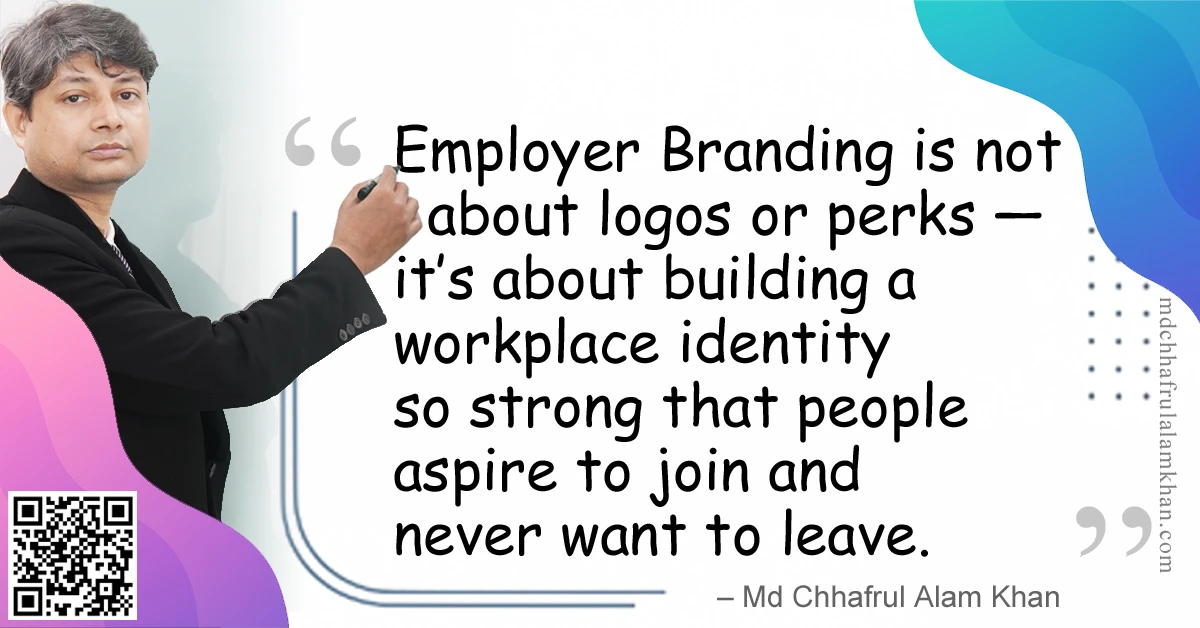
“Employer Branding is not about logos or perks — it’s about building a workplace identity so strong that people aspire to join and never want to leave.”
– Md Chhafrul Alam Khan
Introduction
In the digital era, companies market not only products and services but also themselves as employers. Employer Branding & Recruitment Marketing define how a company is perceived by potential, current, and former employees.
A strong employer brand attracts top talent, reduces hiring costs, and strengthens retention. Recruitment Marketing amplifies this by using digital marketing strategies to reach, engage, and convert candidates into employees.
Together, they make hiring not just a process — but an inspiring journey.
🔎 What is Employer Branding & Recruitment Marketing?
- Employer Branding → Crafting a company’s identity as a workplace (culture, values, benefits).
- Recruitment Marketing → Applying marketing principles to attract and nurture job candidates.
- Goal: Build trust, attract the right talent, and create long-term engagement.
🧩 Core Elements of Employer Branding & Recruitment Marketing
Employer Value Proposition (EVP)
- Define why employees should choose you.
- Highlight values, mission, perks, growth opportunities.
Digital Presence
- Careers page optimization.
- Employee stories, behind-the-scenes videos.
- Social media campaigns on LinkedIn, Instagram, TikTok.
Candidate Experience
- Seamless job application process.
- Timely communication and transparency.
- Feedback at every stage.
Employee Advocacy
- Encourage employees to share experiences online.
- Showcase testimonials and success stories.
- Create brand ambassadors within the workforce.
Recruitment Marketing Campaigns
- Paid ads targeting job seekers.
- SEO for job postings.
- Email nurturing for talent pools.
📊 Example: Employer Branding in the Candidate Journey
| Stage | Strategy | Purpose |
|---|---|---|
| Awareness | Social media recruitment ads | Attract attention of job seekers |
| Consideration | Employee stories & Glassdoor reviews | Build trust in workplace culture |
| Conversion | Optimized careers page | Encourage applications |
| Retention | Learning & development programs | Strengthen loyalty |
| Advocacy | Employee referrals & testimonials | Amplify employer reputation |
🎯 Benefits of Employer Branding & Recruitment Marketing
- Attracts Top Talent → Strong brands draw skilled applicants.
- Reduces Hiring Costs → Lower reliance on external recruiters.
- Improves Retention → Employees stay longer with aligned values.
- Enhances Reputation → Positive perception spreads across industries.
- Boosts Productivity → Engaged employees perform better.
- Strengthens Diversity → Inclusive brands attract diverse talent.
🧭 Types of Employer Branding & Recruitment Marketing Strategies
- Content Marketing for Talent → Blogs, videos, case studies showcasing culture.
- Social Recruiting → Using LinkedIn, Instagram, TikTok for outreach.
- Glassdoor & Review Management → Encouraging authentic feedback.
- Talent Nurturing → Building candidate pipelines via email & CRM.
- Diversity & Inclusion Branding → Highlighting DEI initiatives.
🛠️ Tools for Employer Branding & Recruitment Marketing
- Employer Branding Platforms → Universum, Built In, Glassdoor.
- Recruitment Marketing Tools → SmartDreamers, Beamery, SmashFly.
- ATS (Applicant Tracking Systems) → Greenhouse, Lever, Workday.
- Employee Advocacy → EveryoneSocial, Sociabble.
- Analytics → LinkedIn Talent Insights, Google Analytics, Indeed Analytics.
📊 Employer Branding vs. Recruitment Marketing
| Aspect | Employer Branding | Recruitment Marketing |
|---|---|---|
| Focus | Long-term workplace reputation | Short-term candidate attraction |
| Audience | Employees & job seekers | Active & passive candidates |
| Time Horizon | Ongoing | Campaign-based |
| Channels | Careers page, reviews, social | Ads, SEO, email nurturing |
| Outcome | Strong reputation & retention | Higher applications & hires |
❓ Frequently Asked Questions
Q1: Do small businesses need employer branding?
Yes — even startups can build strong identities to compete with larger employers.
Q2: Is Glassdoor important for reputation?
Yes — candidates rely heavily on employee reviews before applying.
Q3: Can employer branding improve retention?
Absolutely — employees who feel aligned with brand values are more loyal.
Q4: How does recruitment marketing differ from HR?
HR manages internal operations; recruitment marketing promotes jobs like products to attract candidates.
✨ Final Thoughts
Employer Branding & Recruitment Marketing are the people-facing side of digital marketing.
They transform workplaces into brands that inspire trust, loyalty, and pride.
“The strongest employers don’t just hire — they attract, engage, and retain talent through authentic storytelling and meaningful culture.”
– Md Chhafrul Alam Khan
Want to attract top talent and build a strong employer brand?
👉 Work with me to design recruitment marketing strategies that inspire and convert.
Boost Your Knowledge & Skills 🚀
Master SEO from Beginner to Expert with our Free Online Self-Learning Course on SEO Mastery.
You might like↴
- Content Creation Checklist (CCC)
- SEO Encyclopedia
- What Is SEO – Search Engine Optimization? [A Comprehensive Guide]
- How to Become an SEO Expert? A Step-by-Step Guide
- SEO Starter Guide: From Web Whispers to Search Engine Screams
- On-Page SEO Overview
- Title Tag Optimization
- Meta Description Optimization
- Meta Robots Tag Optimization
- Canonical URL Optimization
- Viewport Meta Tag Optimization
- Heading Tag H1 Optimization
- Heading Tags H2–H6 Optimization
- Heading Structure Best Practices
- Keyword Targeting in Content
- Content Structure & Readability
- Content Depth & Word Count
- Multimedia Optimization
- Content Freshness & Updates
- Internal Link Structure
- Anchor Text Optimization
- Fixing Orphan Pages
- SEO-Friendly URL Structure
- URL Parameters & Tracking Codes
- Image File Naming for SEO
- Image Compression & Formats
- Image Alt Text & Title Attributes
- Schema Markup Overview
- Common Schema Types
- Testing & Validating Schema
- Outbound Link Quality & Relevance
- Nofollow, Sponsored & UGC Attributes
- Core Web Vitals Optimization
- Mobile Friendliness
- Accessibility Standards for SEO
- Robots Meta Tag Usage
- Hreflang Implementation
- Manual On-Page SEO Audit Checklist
- On-Page SEO Tools & Software
- Competitor On-Page SEO Analysis
- Technical SEO
- Meta Charset Tag Optimization
- Pagination SEO
- Google Search Algorithm
- The future of SEO in a ChatGPT-dominated world
- SEO Mastery: Complete Course Content
- Lesson 01: What is SEO and Why Does It Matter?
- Lesson 02: Keyword Research Made Simple
- Lesson 03: On-Page SEO Basics
- Lesson 04: Technical SEO