
On-Page SEO Fundamentals↴
Core HTML & Metadata Optimization
>Title Tag Optimization
>Meta Description Optimization
>Meta Robots Tag Optimization
>Canonical URL Optimization
>Meta Charset Tag Optimization
>Viewport Meta Tag Optimization
Heading Structure Optimization
>Heading Tag H1 Optimization
>Heading Tags H2–H6 Optimization
>Heading Structure Best Practices
Content Optimization
>Keyword Targeting in Content
>Content Structure & Readability
>Content Depth & Word Count
>Multimedia Optimization
>Content Freshness & Updates
Internal Linking Optimization
>Internal Link Structure
>Anchor Text Optimization
>Fixing Orphan Pages
URL & Slug Optimization
Image Optimization
>Image File Naming for SEO
>Image Compression & Formats
>Image Alt Text & Title Attributes
Schema Markup & Structured Data
>Schema Markup Overview
>Common Schema Types
>Testing & Validating Schema
External & Outbound Links
>Outbound Link Quality & Relevance
>Nofollow, Sponsored & UGC Attributes
Page Experience & Engagement
>Core Web Vitals Optimization
>Mobile Friendliness
>Accessibility Standards for SEO
Crawl & Indexing Controls (On-Page)
Keyword Targeting in Content: Placing the Right Words in the Right Places

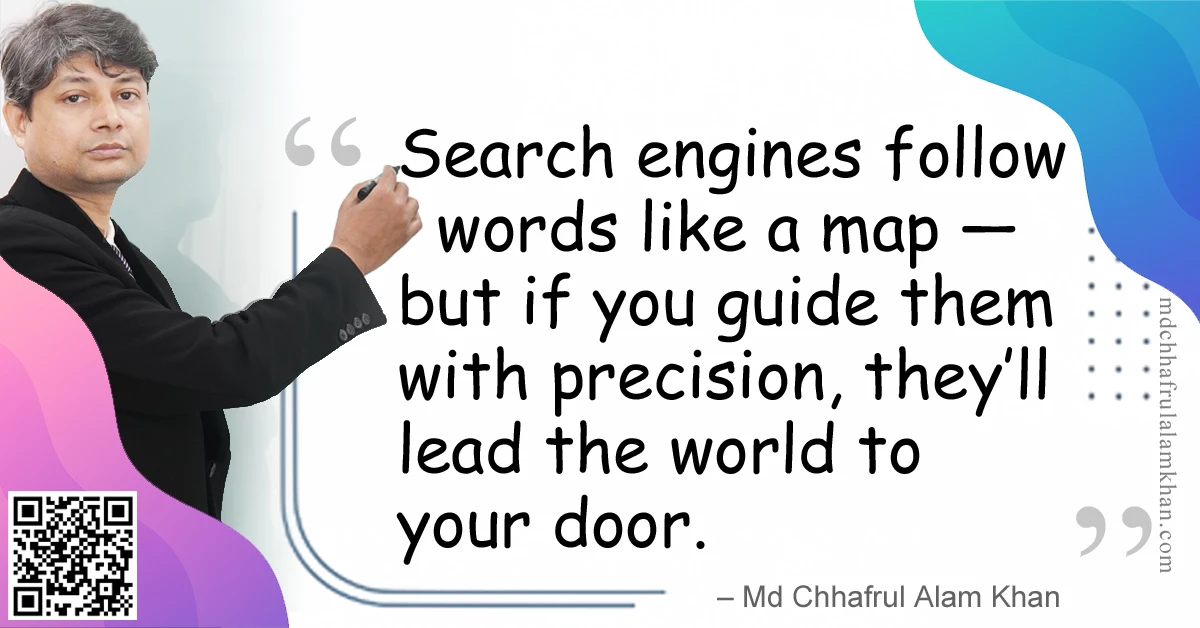
“Search engines follow words like a map — but if you guide them with precision, they’ll lead the world to your door.”
– Md Chhafrul Alam Khan
🧭 What Is Keyword Targeting in Content?
Keyword targeting is the strategic placement of specific search terms throughout your web content to match user intent and improve your visibility in search engine results.
It’s not about stuffing keywords everywhere — it’s about using the right keywords in the right places so both readers and search engines understand your topic.
🎯 Why Keyword Targeting Matters
- Improves Search Visibility
Targeted keywords help your content appear for the right queries. - Attracts Qualified Traffic
The better your keyword targeting, the more relevant visitors you get. - Boosts SEO & AEO
Search engines and AI-driven platforms interpret your content more accurately. - Aligns with User Intent
Ensures your page satisfies what the searcher is actually looking for. - Increases Conversion Potential
The right keywords attract people closer to making a purchase or decision.
📌 The Three Pillars of Keyword Targeting
✅ 1. Primary Keyword
The main keyword your page focuses on.
- Appears in title, H1, intro paragraph, and conclusion.
- Example: “Best Coffee Beans”
✅ 2. Secondary Keywords
Related variations and synonyms that support the main keyword.
- Example: “Top coffee bean brands,” “best arabica beans”
✅ 3. LSI Keywords (Latent Semantic Indexing)
Contextual words and phrases that search engines associate with your topic.
- Example: “espresso,” “medium roast,” “grind size”
📊 Keyword Placement Map
| Placement Area | Purpose | Recommendation |
|---|---|---|
| Title Tag | Signals main topic to search engines | Include primary keyword near start |
| H1 Heading | Reinforces main topic | Match or closely match title keyword |
| First 100 Words | Confirms relevance early | Naturally use main keyword |
| Subheadings (H2–H3) | Helps structure and keyword variation | Use secondary keywords |
| Body Content | Builds context | Sprinkle primary + LSI keywords naturally |
| Image Alt Text | SEO + accessibility | Describe images with relevant terms |
| Meta Description | CTR driver | Include main keyword naturally |
| Conclusion | Reinforce topic | Restate primary keyword with context |
🛠 Tools for Keyword Targeting
| Tool | Purpose |
|---|---|
| Google Keyword Planner | Discover search volume & variations |
| Ahrefs | Competitor keyword analysis |
| SEMrush | Keyword difficulty & SERP features check |
| Surfer SEO | Content optimization recommendations |
| AnswerThePublic | Content ideas from real search queries |
⚠️ Common Mistakes to Avoid
❌ Keyword Stuffing — forces keywords unnaturally, harming readability.
❌ Ignoring Search Intent — ranking for a keyword that doesn’t match user needs.
❌ Focusing Only on Volume — high-volume keywords can be too competitive.
❌ Not Updating Keywords — trends and search behavior change over time.
💡 Pro Tips from My Experience
💎 Pro Tip 1: Always write for humans first, search engines second.
💎 Pro Tip 2: Use “People Also Ask” questions as subheadings — these are keyword-rich and intent-driven.
💎 Pro Tip 3: Map keywords to each stage of the buyer’s journey — awareness, consideration, decision.
🧠 FAQs on Keyword Targeting
Q1: How many keywords should I target on one page?
A: One primary keyword, 3–5 secondary keywords, and multiple LSI keywords.
Q2: Should I use the exact keyword every time?
A: No — use variations and synonyms to keep it natural.
Q3: Does keyword targeting still matter with AI search?
A: Yes — AI still needs semantic signals to understand and match your content to user queries.
Learn> >On-Page SEO >Off-Page SEO >Technical SEO >Local SEO >Next-Gen SEO
Remember:
“SEO is a journey, not a destination.”
– Md Chhafrul Alam Khan
Next Step 🚀
Master SEO from Beginner to Expert with our Free Online Self-Learning Course on SEO Mastery.
Learn> >On-Page SEO >Off-Page SEO >Technical SEO >Local SEO >Next-Gen SEO
Leave a Reply