
SEO↴
Marketing from Beginner to Advanced: The Complete Learning Guide for You | Marketing for Beginners / Advanced Marketing
Beginner–Advanced Educational Guide. Designed to teach marketing from foundation to mastery level.

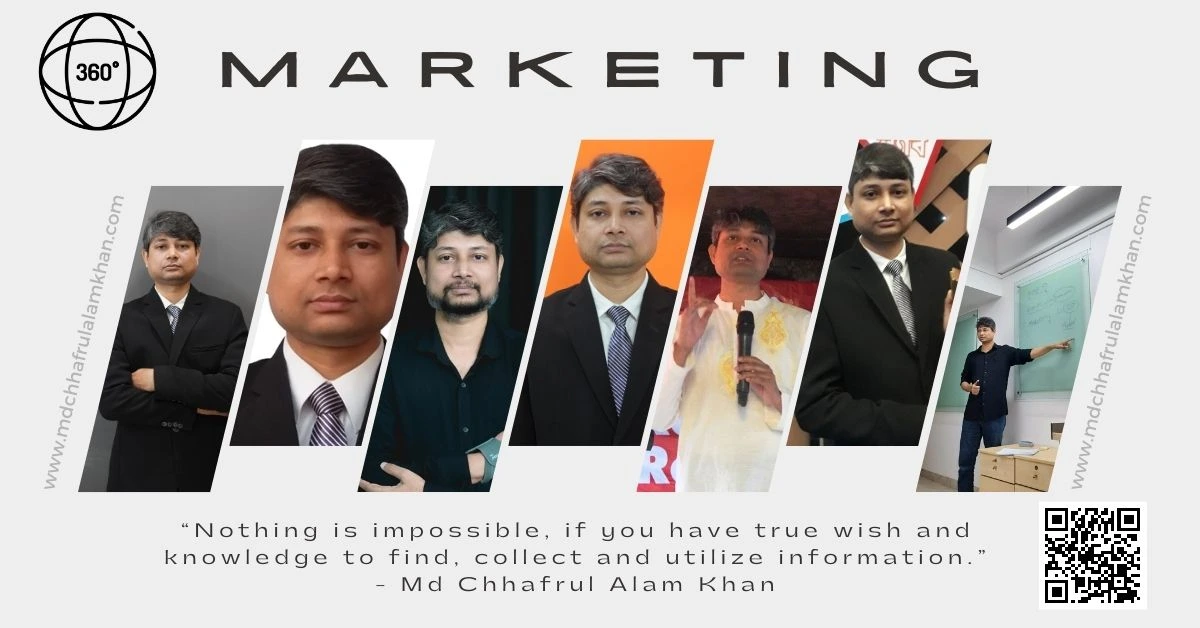
“Marketing mastery is a journey — beginners learn the rules, professionals refine them, and leaders know when to transcend them.”
– Md Chhafrul Alam Khan
Executive Summary
Marketing is a multidisciplinary field involving strategy, psychology, communication, digital systems, analytics, and brand experience. This complete guide walks readers from the beginner level, through intermediate skills, all the way to advanced, expert-level marketing mastery. It is structured for students, professionals, entrepreneurs, and anyone wanting to build deep capability in modern marketing.
Introduction
The marketing landscape has evolved dramatically.
Traditional methods are no longer enough; modern marketing requires a blend of analytical thinking, digital literacy, strategic planning, creativity, and AI-powered execution.
This guide provides a complete roadmap for learning marketing from the ground up — whether you are starting your journey or aiming to advance your career to senior or expert level.
⭐ BEGINNER LEVEL (Marketing Fundamentals)
This section is for new learners who want to understand the basics of marketing, its purpose, and core concepts.
1. What Marketing Really Means
Beginner learners must understand the central idea:
Marketing = Understanding customer needs + Communicating value + Driving growth
It includes:
- Branding
- Content
- Communication
- Digital channels
- Customer experience
2. The 4 Ps of Marketing (Classic Model)
A beginner’s foundation:
- Product – What you sell
- Price – How much you charge
- Place – Where customers find you
- Promotion – How you reach your audience
These remain essential basics.
3. Target Audience Basics
Beginners must learn:
- Demographics
- Psychographics
- Interests
- Problems
- Buying patterns
Understanding your audience is the foundation of success.
4. Basic Digital Marketing Concepts
Beginners should learn:
- What SEO is
- What social media marketing is
- What content marketing means
- What email marketing does
- What paid ads are
These are the pillars of modern visibility.
5. Beginner Tools to Learn
- Canva
- Google Analytics (basic)
- Mailchimp
- Meta Business Suite
- Keyword Planner
These tools help beginners build foundational skills.
⭐ INTERMEDIATE LEVEL (Practical Skills & Execution)
This section is for learners who understand the basics and want to perform real marketing tasks.
1. Customer Journey Mapping
Intermediate marketers learn how a customer moves from:
Awareness → Consideration → Decision → Action → Loyalty
Mapping this journey improves strategy and content.
2. Content Strategy & Creation
Intermediate learners must master:
- Blog writing
- Social media content
- Landing page copy
- Visual content
- Email communication
- Storytelling
Quality content increases visibility and trust.
3. Search Engine Optimization (SEO)
A more advanced understanding of:
- On-page SEO
- Technical SEO
- Keyword research
- Internal linking
- Content optimization
- Local SEO
- Schema
Intermediate marketers begin applying practical SEO strategies.
4. Social Media Strategy
At this level, learners must understand:
- Platforms differences
- Content calendars
- Engagement strategy
- Community management
- Analytics interpretation
- Paid promotion basics
This turns social media into a growth engine.
5. Paid Advertising (Performance Marketing)
Intermediates learn:
- Google Ads
- Facebook/Instagram Ads
- YouTube Ads
- Retargeting
- Campaign objectives
- Budget allocation
- ROI measurement
Paid ads accelerate leads and customers.
6. Email Marketing & Automation
Intermediate marketers must understand:
- Segmentation
- Drip campaigns
- Personalization
- CTAs
- Deliverability
- Lead nurturing
Email remains one of the highest-ROI channels in marketing.
7. Analytics & Reporting
Key intermediate abilities:
- Analyze traffic
- Identify performance trends
- Understand attribution
- Interpret metrics
- Report insights
Data-driven decision-making begins here.
8. Brand Communication & Messaging
Intermediate marketers learn:
- Tone of voice
- Brand story
- Unique value proposition
- Communication hierarchy
- Customer psychology basics
This builds identity and resonance.
⭐ ADVANCED LEVEL (Expert Strategy, Leadership, and Optimization)
This section elevates learners to strategic, executive, and expert-level marketing.
1. Advanced Positioning & Differentiation Strategy
Expert marketers master:
- Category analysis
- Competitive differentiation
- Narrative design
- Perception engineering
- Market leadership strategy
Positioning defines how a brand is perceived — and why it matters.
2. Full-Funnel Marketing Design
Advanced marketers structure:
- Awareness systems
- Demand generation
- Lead nurturing
- Conversion optimization
- Retention loops
- Advocacy systems
This creates predictable growth engines.
3. Behavioral Psychology & Consumer Decision Science
Expert marketers study:
- Cognitive biases
- Emotional triggers
- Social proof
- Scarcity and urgency
- Influence science
- Pain–solution mapping
Psychology drives behavior — behavior drives sales.
4. Integrated Marketing Communication (IMC)
Experts unify:
- Messaging
- Branding
- Channels
- Campaigns
- Touchpoints
IMC ensures consistency across all experiences.
5. Marketing Automation & AI Integration
Advanced marketers use:
- HubSpot automation
- AI content workflows
- Predictive analytics
- Chatbots
- CRM intelligence
Technology enables scale and personalization.
6. Growth Marketing & Experimentation Frameworks
Experts master:
- A/B testing
- Data modeling
- Funnel experimentation
- Conversion optimization
- Growth loops
- Predictive performance strategies
Growth becomes scientific, not random.
7. Marketing Leadership & Operations
Executive marketers manage:
- Cross-functional teams
- Budget allocation
- Strategy alignment
- Revenue collaboration
- Performance dashboards
- Agency management
Leadership connects marketing to organizational impact.
8. Advanced Analytics & Attribution Models
Experts leverage:
- Multi-touch attribution
- Cohort analysis
- Lifetime value prediction
- Channel performance modeling
- ROI optimization
- Marketing dashboards
This enables precision in resource allocation.
⭐ Complete Beginner-to-Advanced Learning Roadmap
Beginner
✔ Understanding basics
✔ Learning core tools
✔ Knowing channels
✔ Basic content skills
Intermediate
✔ Strategy building
✔ Execution across channels
✔ Analytics and optimization
✔ Audience segmentation
✔ Full content systems
Advanced
✔ Leadership-level strategy
✔ Funnel optimization
✔ Positioning mastery
✔ AI-enabled growth systems
✔ High-level analytics
✔ Conversion architecture
This roadmap transforms a learner into a full-stack marketing professional.
⭐ Recommended Tools by Level
Beginner Tools
- Canva
- Mailchimp
- Google Trends
- Keyword Planner
- Meta Business Suite
Intermediate Tools
- SEMrush
- Ahrefs
- HubSpot
- Google Analytics 4
- Buffer/Sprout Social
Advanced Tools
- Salesforce Marketing Cloud
- Marketo
- Tableau
- Looker Studio
- HubSpot Marketing Hub Enterprise
- Mixpanel
Frequently Asked Questions
1. How long does it take to learn marketing from beginner to advanced?
6–24 months depending on learning speed and practical exposure.
2. Can you learn marketing without a degree?
Yes. Skills, experience, and practical execution matter more than formal education.
3. What is the most important skill in marketing?
Understanding customers — everything else follows from this.
4. Is marketing still a good career?
Yes. Marketing is one of the most in-demand, future-proof careers globally.
Conclusion
Marketing is a dynamic, multidisciplinary field that combines creativity, psychology, technology, and data to drive business growth.
Whether you’re a beginner learning the basics, an intermediate professional building practical skills, or an advanced marketer shaping strategy and leadership, this guide provides the structure, clarity, and direction needed for long-term success.
Marketing mastery is a journey — and this is the roadmap to reach the top.
You might like↴
📢 Please, share this guide with anyone looking to improve their Marketing skills! 🚀💡
Leave a Reply