
Digital Marketing >
SEO >
On-Page SEO ↴
Core HTML & Metadata Optimization
>Title Tag Optimization
>Meta Description Optimization
>Meta Robots Tag Optimization
>Canonical URL Optimization
>Meta Charset Tag Optimization
>Viewport Meta Tag Optimization
Heading Structure Optimization
>Heading Tag H1 Optimization
>Heading Tags H2–H6 Optimization
>Heading Structure Best Practices
Content Optimization
>Keyword Targeting in Content
>Content Structure & Readability
>Content Depth & Word Count
>Multimedia Optimization
>Content Freshness & Updates
Internal Linking Optimization
>Internal Link Structure
>Anchor Text Optimization
>Fixing Orphan Pages
URL & Slug Optimization
Image Optimization
>Image File Naming for SEO
>Image Compression & Formats
>Image Alt Text & Title Attributes
Schema Markup & Structured Data
>Schema Markup Overview
>Common Schema Types
>Testing & Validating Schema
External & Outbound Links
>Outbound Link Quality & Relevance
>Nofollow, Sponsored & UGC Attributes
Page Experience & Engagement
>Core Web Vitals Optimization
>Mobile Friendliness
>Accessibility Standards for SEO
Crawl & Indexing Controls (On-Page)
On-Page SEO Overview: The Complete Master Guide

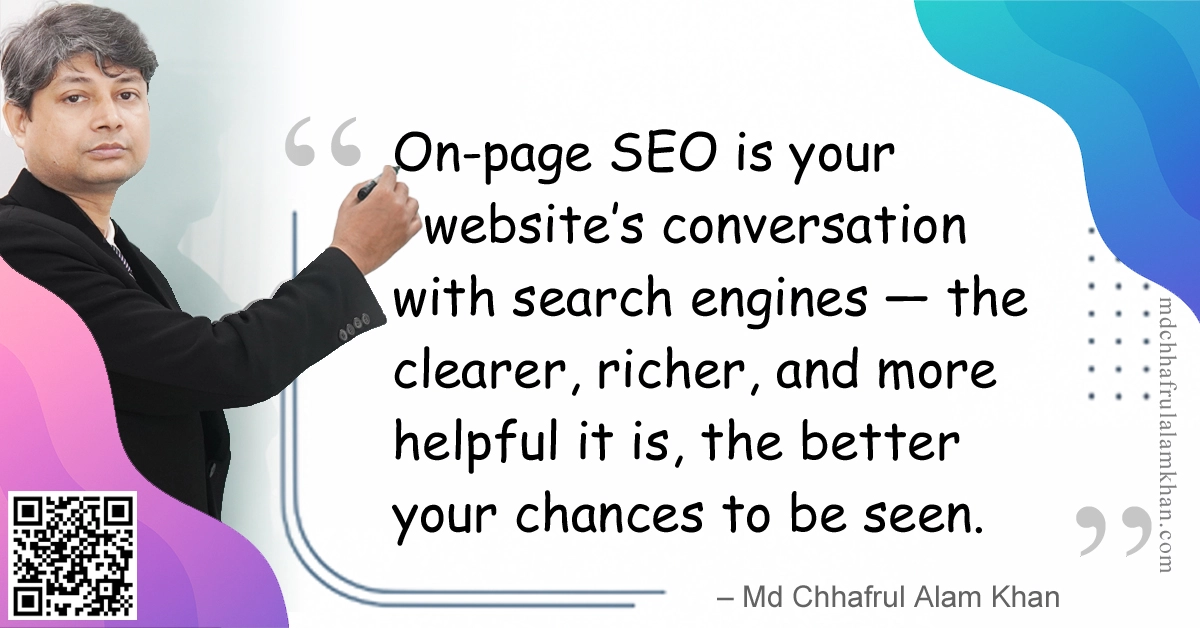
“On-page SEO is your website’s conversation with search engines — the clearer, richer, and more helpful it is, the better your chances to be seen.”
– Md Chhafrul Alam Khan
🧭 What is On-Page SEO?
On-Page SEO is the process of optimizing individual web pages so they rank higher in search engines and attract more relevant traffic.
It focuses on the content and HTML source code of a page, unlike Off-Page SEO, which involves external signals like backlinks.
Example in Action:
When you add a keyword-rich title, improve your meta description, and optimize images with alt text, you are doing on-page SEO.
🎯 Why On-Page SEO Matter
- Direct Ranking Factor
Search engines read your page structure before deciding how relevant you are to a query. - Better User Experience (UX)
Well-optimized pages load faster, are easier to navigate, and deliver clear answers. - Supports AI Search (AEO + GEO)
- AEO (Answer Engine Optimization): Helps AI-powered answers extract accurate info from your page.
- GEO (Generative Engine Optimization): Ensures AI summarizers display your content correctly.
- Multichannel Consistency
On-page optimization ensures your content is equally effective across Google Search, voice assistants, and AI chatbots.
📊 Core Elements of On-Page SEO
| Element | Purpose | Example |
|---|---|---|
| Title Tag | The clickable headline in search results | <title>Best Vegan Protein Powders</title> |
| Meta Description | Summary shown under title in SERPs | “Discover the top vegan protein powders for health…” |
| Headings (H1–H6) | Organize content hierarchy | <h1>Vegan Protein Powders</h1> |
| Image Alt Text | Describes images for SEO & accessibility | <img src="powder.jpg" alt="Vegan protein powder scoop"> |
| Internal Links | Connect related pages to distribute SEO value | <a href="/vegan-recipes">Vegan Recipes</a> |
| Schema Markup | Structured data for rich snippets | JSON-LD for product ratings, reviews, FAQ |
| Mobile Friendliness | Optimizes for all devices | Responsive CSS media queries |
| Page Speed | Reduces load time to improve rankings & UX | Compress images, minify CSS/JS |
💼 Mini Case Study: The Blog That Tripled Its Traffic
Before:
A food blog posted recipes without headings, meta descriptions, or image alt text.
Bounce rate: 78%, Avg. session: 34 seconds.
After On-Page SEO Optimization:
✅ Added descriptive H1 and H2s
✅ Wrote unique meta descriptions
✅ Optimized images with descriptive alt text
✅ Linked related recipes internally
Results in 90 days:
📈 Organic traffic increased 3.2×
📉 Bounce rate dropped to 46%
⏳ Avg. session length increased to 2 minutes 14 seconds
📌 On-Page SEO Optimization Workflow
1️⃣ Research & Plan
- Identify primary keyword + LSI (Latent Semantic Indexing) keywords.
- Understand search intent (informational, transactional, navigational).
2️⃣ Optimize Content & Structure
- Use one clear H1 per page.
- Organize sections with H2/H3 tags.
- Maintain short, readable paragraphs.
3️⃣ Optimize HTML Elements
- Title tag: 50–60 characters.
- Meta description: 150–160 characters.
- Use
<meta charset="UTF-8">for universal text display.
4️⃣ Improve Technical Factors
- Ensure mobile responsiveness.
- Optimize load speed (Core Web Vitals).
- Add schema markup for rich results.
5️⃣ Publish & Interlink
- Link to related pages with descriptive anchor text.
- Avoid orphan pages.
6️⃣ Monitor & Adjust
- Use Google Search Console for indexing status.
- Check rankings with SEO tools.
- Update content regularly.
🛠 Recommended Tools for On-Page SEO
| Tool | Purpose |
|---|---|
| Google Search Console | Crawl, indexing, and performance data |
| Ahrefs / SEMrush | Keyword and competitor analysis |
| Yoast SEO / Rank Math | On-page SEO optimization for WordPress |
| PageSpeed Insights | Test and improve load times |
| W3C Validator | Check HTML structure |
⚠️ Common Mistakes to Avoid
❌ Keyword stuffing (unnatural repetition)
❌ Duplicate title tags across pages
❌ Missing meta descriptions
❌ Unoptimized images with no alt text
❌ Ignoring mobile usability
💡 Pro Tips from My Experience
💎 Pro Tip 1: Always check how your page appears in SERPs before publishing.
💎 Pro Tip 2: Use structured data for FAQs, products, or articles to grab rich snippets.
💎 Pro Tip 3: Update your best-performing pages at least every 6–12 months to keep rankings fresh.
📈 On-Page SEO & AI Search
With Google SGE (Search Generative Experience), Microsoft Copilot, and Perplexity AI, structured and semantically clear content is more important than ever.
On-page SEO is no longer just about keywords — it’s about being the best answer.
🧠 FAQs on On-Page SEO
Q1: Is on-page SEO enough to rank #1?
A: Not alone. You need a balanced SEO strategy with on-page + off-page + technical SEO.
Q2: How often should I audit my on-page SEO?
A: At least quarterly, or after any major algorithm update.
Q3: Does adding more keywords always help?
A: No. Quality and relevance beat quantity.
Learn> >On-Page SEO >Off-Page SEO >Technical SEO >Local SEO >Next-Gen SEO
Remember:
“SEO is a journey, not a destination.”
– Md Chhafrul Alam Khan
Next Step 🚀
Master SEO from Beginner to Expert with our Free Online Self-Learning Course on SEO Mastery.
Learn> >On-Page SEO >Off-Page SEO >Technical SEO >Local SEO >Next-Gen SEO
Leave a Reply