
On-Page SEO Fundamentals↴
Core HTML & Metadata Optimization
>Title Tag Optimization
>Meta Description Optimization
>Meta Robots Tag Optimization
>Canonical URL Optimization
>Meta Charset Tag Optimization
>Viewport Meta Tag Optimization
Heading Structure Optimization
>Heading Tag H1 Optimization
>Heading Tags H2–H6 Optimization
>Heading Structure Best Practices
Content Optimization
>Keyword Targeting in Content
>Content Structure & Readability
>Content Depth & Word Count
>Multimedia Optimization
>Content Freshness & Updates
Internal Linking Optimization
>Internal Link Structure
>Anchor Text Optimization
>Fixing Orphan Pages
URL & Slug Optimization
Image Optimization
>Image File Naming for SEO
>Image Compression & Formats
>Image Alt Text & Title Attributes
Schema Markup & Structured Data
>Schema Markup Overview
>Common Schema Types
>Testing & Validating Schema
External & Outbound Links
>Outbound Link Quality & Relevance
>Nofollow, Sponsored & UGC Attributes
Page Experience & Engagement
>Core Web Vitals Optimization
>Mobile Friendliness
>Accessibility Standards for SEO
Crawl & Indexing Controls (On-Page)
Manual On-Page SEO Audit Checklist: Step-by-Step Guide

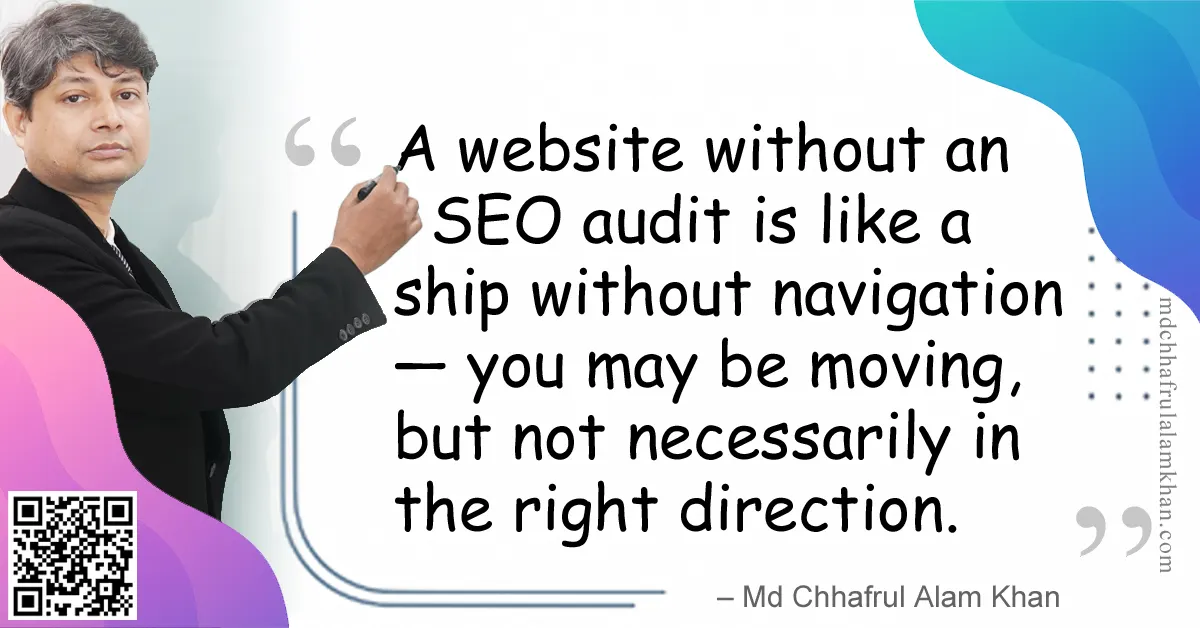
“A website without an SEO audit is like a ship without navigation — you may be moving, but not necessarily in the right direction.”
– Md Chhafrul Alam Khan
🧭 What is a Manual On-Page SEO Audit?
A manual on-page SEO audit is the process of reviewing individual pages of your website by hand (not relying only on tools) to ensure that all critical SEO elements are optimized.
Unlike automated scans, a manual audit allows you to:
- Detect contextual errors tools may miss.
- Ensure content quality and user experience align with SEO best practices.
- Validate technical and semantic elements at the human level.
🎯 Why Manual On-Page Audits Matter
- Catch What Tools Miss
- Tools detect technical issues but can’t judge tone, relevance, or persuasiveness.
- Ensure Human-Centric Optimization
- SEO is not only about bots — it’s about real people.
- Maintain Content Quality
- Readability, depth, and intent can only be checked manually.
- Improve Crawl & Index Efficiency
- Confirm robots, canonicals, and hreflang are set correctly.
- Future-Proof SEO
- Manual reviews align with AEO (Answer Engine Optimization) and GEO (Generative Engine Optimization) needs.
📋 Step-by-Step Manual On-Page SEO Audit Checklist
🔤 1. Title Tags
- ✅ Unique for every page
- ✅ Includes primary keyword naturally
- ✅ 50–60 characters length
- ✅ Compelling, click-worthy
📝 2. Meta Descriptions
- ✅ Clear, unique, keyword-focused
- ✅ Within 150–160 characters
- ✅ Persuasive, benefits-driven
🏷 3. Headings (H1–H6)
- ✅ One main H1 per page
- ✅ Logical hierarchy of H2–H6
- ✅ Include keywords naturally
- ✅ Enhance readability & flow
📄 4. Content Quality
- ✅ Unique, original, non-duplicated
- ✅ Covers topic in sufficient depth
- ✅ Optimized for readability (short paragraphs, bullet points, visuals)
- ✅ Includes keywords + synonyms + semantic terms
🔑 5. Keyword Usage
- ✅ Keywords placed in first 100 words
- ✅ Balanced keyword density (no stuffing)
- ✅ Semantic keywords (LSI) included
- ✅ Long-tail keywords for niche targeting
📸 6. Images & Multimedia
- ✅ Optimized file names (e.g.,
seo-audit-checklist.jpg) - ✅ Alt text describes image meaningfully
- ✅ Compressed without losing quality
- ✅ Relevant visuals support content
🔗 7. Internal Linking
- ✅ At least 2–3 contextual internal links per page
- ✅ Descriptive anchor text
- ✅ Links to relevant and important pages
- ✅ No orphan pages left behind
🌍 8. External Linking
- ✅ Outbound links to authoritative sources
- ✅ No broken external links
- ✅ Use
rel="nofollow"where appropriate (ads, sponsored links)
🌐 9. URL Structure
- ✅ Short, descriptive, keyword-friendly
- ✅ Use hyphens, not underscores
- ✅ Avoid unnecessary parameters
- ✅ Consistent across website
📱 10. Mobile Friendliness
- ✅ Responsive design
- ✅ Proper font size
- ✅ Tap-friendly buttons/links
- ✅ Check across multiple devices
⚡ 11. Page Speed
- ✅ Loads under 3 seconds
- ✅ Optimized images and scripts
- ✅ Minified CSS/JS
- ✅ Uses caching and CDN where possible
🧭 12. Navigation & UX
- ✅ Clear menu structure
- ✅ Logical content flow
- ✅ Easy access to key pages (contact, about, services)
- ✅ Avoid intrusive popups
🤖 13. Technical SEO Elements
- ✅ Robots meta tag is correct (
index, follow) - ✅ Canonical tag set correctly
- ✅ hreflang implemented for multilingual sites
- ✅ Structured data/schema markup added
📊 14. Analytics & Tracking
- ✅ Google Analytics 4 installed
- ✅ Google Search Console verified
- ✅ Conversion tracking in place
- ✅ Heatmaps/user behavior tools configured
🛠 Tools to Support Manual Audits
| Tool | Purpose |
|---|---|
| Google Search Console | Crawl/index issues |
| Screaming Frog SEO Spider | Internal link mapping |
| Ahrefs / SEMrush | Content gap + keyword audit |
| Lighthouse | Performance & accessibility |
| Manual Review | Human readability & persuasion |
⚠️ Common Mistakes to Avoid
❌ Relying only on tools — missing context
❌ Keyword stuffing instead of natural placement
❌ Skipping internal linking opportunities
❌ Ignoring mobile experience
❌ Using duplicate titles/meta descriptions
📈 SEO Benefits of Manual Audits
- Better Indexation → No hidden crawl barriers
- Improved Rankings → Search engines value structured, human-focused content
- Higher CTR → Strong titles and meta descriptions drive clicks
- Enhanced User Experience → Content built for both bots and humans
🧠 FAQs on Manual On-Page SEO Audits
Q1: How often should I do a manual on-page SEO audit?
A: At least once per quarter or after major website changes.
Q2: Do I need both manual and automated audits?
A: Yes — tools catch technical gaps, manual checks ensure content quality.
Q3: Should I audit all pages or only important ones?
A: Start with high-value pages (home, product, top blogs), then expand.
Learn> >On-Page SEO >Off-Page SEO >Technical SEO >Local SEO >Next-Gen SEO
Remember:
“SEO is a journey, not a destination.”
– Md Chhafrul Alam Khan
Next Step 🚀
Master SEO from Beginner to Expert with our Free Online Self-Learning Course on SEO Mastery.
Learn> >On-Page SEO >Off-Page SEO >Technical SEO >Local SEO >Next-Gen SEO
Leave a Reply