
📖 Digital Marketing Encyclopedia – Chapter 41
Reputation & Review Management

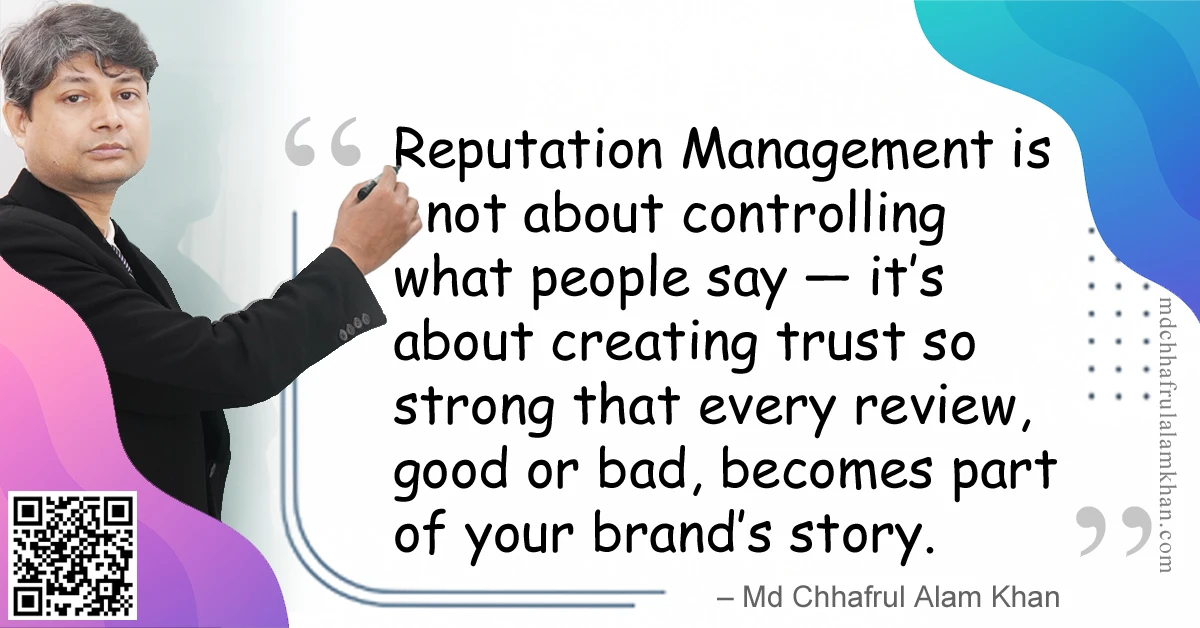
“Reputation Management is not about controlling what people say — it’s about creating trust so strong that every review, good or bad, becomes part of your brand’s story.”
– Md Chhafrul Alam Khan
Introduction
In the digital age, a brand’s reputation is its most valuable asset. Customers trust online reviews as much as personal recommendations, and a single negative review can impact purchasing decisions.
Reputation & Review Management is the process of monitoring, influencing, and improving how a brand is perceived across digital platforms. From Google reviews to Trustpilot, Glassdoor to Yelp, managing reputation is critical for customer trust, SEO, and long-term growth.
🔎 What is Reputation & Review Management?
- Reputation Management → Strategic monitoring and shaping of a brand’s public perception.
- Review Management → Encouraging, responding to, and leveraging customer reviews across platforms.
- Together, they create trust signals that influence customer decisions and search engine rankings.
🧩 Core Elements of Reputation & Review Management
Monitoring & Listening
- Track mentions across social media, blogs, and forums.
- Monitor Google reviews, Yelp, TripAdvisor, Glassdoor.
- Use sentiment analysis tools for insights.
Proactive Review Collection
- Request feedback via email, SMS, or after purchase.
- Incentivize honest reviews with loyalty points or discounts.
- Make review submission simple and frictionless.
Responding to Reviews
- Thank customers for positive feedback.
- Address negative reviews politely and professionally.
- Show transparency by resolving issues publicly.
Crisis Management
- Have a plan for PR crises (product recalls, viral backlash).
- Communicate quickly, empathetically, and transparently.
Leveraging Reviews
- Use testimonials in marketing campaigns.
- Highlight ratings on websites and product pages.
- Share customer success stories on social media.
📊 Example: Reputation in the Customer Journey
| Stage | Reputation Action | Purpose |
|---|---|---|
| Awareness | Positive online reviews | Build trust early |
| Consideration | Case studies & testimonials | Strengthen decision-making |
| Conversion | Ratings displayed on product pages | Drive purchase confidence |
| Retention | Loyalty-driven feedback programs | Keep customers engaged |
| Advocacy | User-generated reviews & referrals | Amplify brand reputation |
🎯 Benefits of Reputation & Review Management
- Trust Building → Reviews increase credibility.
- SEO Boost → Google considers reviews a ranking factor.
- Higher Conversions → Ratings and testimonials reduce buyer hesitation.
- Customer Insights → Reviews reveal real feedback for improvement.
- Competitive Edge → A strong reputation differentiates from rivals.
- Crisis Prevention → Early monitoring prevents damage escalation.
🧭 Types of Reputation Management Strategies
- Search Engine Reputation Management (SERM) → Push positive content higher, suppress negatives.
- Online Review Management (ORM) → Collect, respond, and showcase reviews.
- Employer Reputation → Manage Glassdoor, LinkedIn, and career reviews.
- Social Media Reputation → Engage and respond on platforms like X (Twitter), Facebook, LinkedIn.
- Crisis PR → Proactive communication during brand challenges.
🛠️ Tools for Reputation & Review Management
- Monitoring Tools → Brand24, Mention, Google Alerts.
- Review Collection → Trustpilot, Feefo, Yotpo, BirdEye.
- Reputation Platforms → Podium, ReviewTrackers, Birdeye.
- Analytics → Google Business Profile Insights, SEMrush Brand Monitoring.
- Social Listening → Hootsuite, Sprout Social.
📊 Reputation Management vs. Review Management
| Aspect | Reputation Management | Review Management |
|---|---|---|
| Scope | Overall brand image | Customer reviews only |
| Channels | PR, social, SEO, news coverage | Google, Yelp, Trustpilot, etc. |
| Proactivity | Long-term perception shaping | Short-term review handling |
| Measurement | Brand sentiment, trust index | Ratings, review volume |
| Impact | Global reputation | Purchase decision influence |
❓ Frequently Asked Questions
Q1: Can I delete negative reviews?
No — but you can respond professionally and resolve issues to minimize damage.
Q2: Do reviews really affect SEO?
Yes — review quantity, quality, and recency are ranking signals.
Q3: How many reviews do I need?
Consistency is more important than volume — regular, authentic reviews matter most.
Q4: Should I respond to all reviews?
Yes — even a simple “thank you” strengthens relationships.
✨ Final Thoughts
Reputation & Review Management is the trust currency of digital marketing.
It ensures that customers don’t just find your brand — they believe in it, choose it, and advocate for it.
“The strongest brands don’t hide from feedback — they embrace it, respond to it, and grow stronger because of it.”
– Md Chhafrul Alam Khan
Want to strengthen your brand’s reputation and leverage reviews for growth?
👉 Work with me to design a reputation management strategy that builds trust and visibility.
Boost Your Knowledge & Skills 🚀
Master SEO from Beginner to Expert with our Free Online Self-Learning Course on SEO Mastery.
You might like↴
- Content Creation Checklist (CCC)
- SEO Encyclopedia
- What Is SEO – Search Engine Optimization? [A Comprehensive Guide]
- How to Become an SEO Expert? A Step-by-Step Guide
- SEO Starter Guide: From Web Whispers to Search Engine Screams
- On-Page SEO Overview
- Title Tag Optimization
- Meta Description Optimization
- Meta Robots Tag Optimization
- Canonical URL Optimization
- Viewport Meta Tag Optimization
- Heading Tag H1 Optimization
- Heading Tags H2–H6 Optimization
- Heading Structure Best Practices
- Keyword Targeting in Content
- Content Structure & Readability
- Content Depth & Word Count
- Multimedia Optimization
- Content Freshness & Updates
- Internal Link Structure
- Anchor Text Optimization
- Fixing Orphan Pages
- SEO-Friendly URL Structure
- URL Parameters & Tracking Codes
- Image File Naming for SEO
- Image Compression & Formats
- Image Alt Text & Title Attributes
- Schema Markup Overview
- Common Schema Types
- Testing & Validating Schema
- Outbound Link Quality & Relevance
- Nofollow, Sponsored & UGC Attributes
- Core Web Vitals Optimization
- Mobile Friendliness
- Accessibility Standards for SEO
- Robots Meta Tag Usage
- Hreflang Implementation
- Manual On-Page SEO Audit Checklist
- On-Page SEO Tools & Software
- Competitor On-Page SEO Analysis
- Technical SEO
- Meta Charset Tag Optimization
- Pagination SEO
- Google Search Algorithm
- The future of SEO in a ChatGPT-dominated world
- SEO Mastery: Complete Course Content
- Lesson 01: What is SEO and Why Does It Matter?
- Lesson 02: Keyword Research Made Simple
- Lesson 03: On-Page SEO Basics
- Lesson 04: Technical SEO