
📖 Digital Marketing Encyclopedia – Chapter 27
Shopping Engines & Comparison Sites

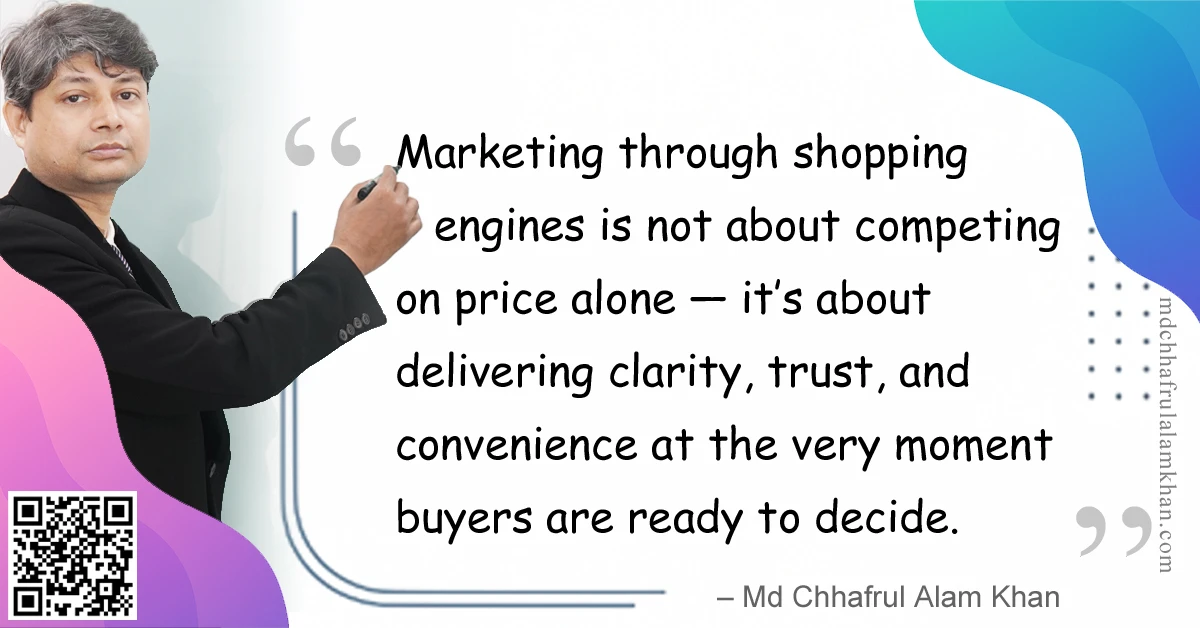
“Marketing through shopping engines is not about competing on price alone — it’s about delivering clarity, trust, and convenience at the very moment buyers are ready to decide.”
– Md Chhafrul Alam Khan
Introduction
Shopping Engines and Comparison Sites have become essential for e-commerce visibility. Platforms like Google Shopping, PriceGrabber, Shopzilla, and Kelkoo allow customers to compare products, prices, reviews, and sellers before making purchase decisions.
For businesses, these platforms act as digital shelves — ensuring products appear when buyers are actively searching and ready to purchase. Optimizing presence on shopping engines not only drives qualified traffic but also builds brand trust by being seen alongside competitors.
🔎 What are Shopping Engines & Comparison Sites?
- Shopping Engines → Platforms like Google Shopping that aggregate products from multiple sellers and display them in search results.
- Comparison Sites → Websites where customers can compare prices, features, and reviews before buying (e.g., PriceRunner, ShopMania).
- These channels focus on purchase-ready traffic rather than just awareness.
🧩 Core Elements of Shopping Engine & Comparison Marketing
Product Data Feeds
- Accurate product titles, descriptions, categories.
- High-quality images and competitive pricing.
- Real-time stock updates.
Optimization
- Keyword-rich product titles and attributes.
- Competitive shipping, offers, and discounts.
- Structured data for better product indexing.
Advertising & Bidding
- Product Listing Ads (PLA) on Google Shopping.
- Cost-per-click bidding models.
- Dynamic remarketing campaigns.
Trust & Reviews
- Verified reviews from customers.
- Seller ratings displayed on engines.
- Clear return and warranty policies.
Analytics & Insights
- Monitor impressions, CTR, and conversions.
- Track revenue per channel.
- Adjust bids based on product performance.
📊 Example: Shopping Engines in the Customer Journey
| Stage | Shopping Engine Strategy | Purpose |
|---|---|---|
| Awareness | Google Shopping Ads | Capture buyer attention |
| Consideration | Comparison listings & reviews | Build trust & differentiate offers |
| Conversion | Optimized product feeds | Drive sales |
| Retention | Remarketing campaigns | Encourage repeat purchases |
| Advocacy | Positive reviews on platforms | Amplify trust & referrals |
🎯 Benefits of Shopping Engines & Comparison Sites
- High-Intent Traffic → Attracts buyers close to purchase.
- Increased Visibility → Products appear in top search results.
- Competitive Edge → Stand out with reviews, offers, and trust.
- Data Insights → Learn customer behavior and pricing trends.
- Cross-Channel Support → Complements SEO, SEM, and marketplace marketing.
- Scalable → Works for small sellers to enterprise-level businesses.
🧭 Types of Shopping Engines & Comparison Platforms
- Google Shopping → Global leader in product search.
- Price Comparison Sites → PriceGrabber, Shopzilla, Kelkoo, PriceRunner.
- Specialized Sites → Skyscanner (travel), Trivago (hotels), Idealo (Europe).
- Affiliate-Driven Comparisons → Niche sites earning commissions per sale.
🛠️ Tools for Shopping Engine Optimization
- Feed Management → DataFeedWatch, GoDataFeed, Channable
- Analytics & Tracking → Google Merchant Center, Looker Studio, SEMrush
- Review Collection → Trustpilot, Yotpo, Feefo
- Automation Tools → ShoppingFeeder, Lengow, ChannelAdvisor
📊 Shopping Engines vs. Marketplaces
| Aspect | Shopping Engines & Comparison | Marketplaces (Amazon, eBay) |
|---|---|---|
| Control | Seller website controls checkout | Marketplace controls transaction |
| Branding | Stronger — traffic lands on site | Limited branding opportunities |
| Competition | Visible side-by-side comparisons | Direct seller competition in search |
| Cost | CPC bidding + feed management | Marketplace fees & commissions |
| Relationship | Direct customer relationship | Marketplace owns customer data |
❓ Frequently Asked Questions
Q1: Is Google Shopping only for big businesses?
No — small businesses can compete with optimized feeds and niche products.
Q2: How do I stand out on comparison sites?
By offering competitive pricing, verified reviews, and optimized product titles.
Q3: Do shopping engines improve SEO?
Indirectly — they drive referral traffic, brand signals, and visibility.
Q4: What’s the cost model?
Most shopping engines operate on a cost-per-click (CPC) model.
✨ Final Thoughts
Shopping Engines and Comparison Sites are decision-making gateways for customers.
They put products directly in front of buyers who are ready to act, making them some of the highest-converting digital marketing channels.
“The strongest brands don’t just list products — they optimize feeds, build trust, and win comparisons at the critical purchase moment.”
– Md Chhafrul Alam Khan
Want to maximize your visibility on Google Shopping and comparison sites?
👉 Work with me to create optimized product feeds and high-ROI shopping campaigns.
Boost Your Knowledge & Skills 🚀
Master SEO from Beginner to Expert with our Free Online Self-Learning Course on SEO Mastery.
You might like↴
- Content Creation Checklist (CCC)
- SEO Encyclopedia
- What Is SEO – Search Engine Optimization? [A Comprehensive Guide]
- How to Become an SEO Expert? A Step-by-Step Guide
- SEO Starter Guide: From Web Whispers to Search Engine Screams
- On-Page SEO Overview
- Title Tag Optimization
- Meta Description Optimization
- Meta Robots Tag Optimization
- Canonical URL Optimization
- Viewport Meta Tag Optimization
- Heading Tag H1 Optimization
- Heading Tags H2–H6 Optimization
- Heading Structure Best Practices
- Keyword Targeting in Content
- Content Structure & Readability
- Content Depth & Word Count
- Multimedia Optimization
- Content Freshness & Updates
- Internal Link Structure
- Anchor Text Optimization
- Fixing Orphan Pages
- SEO-Friendly URL Structure
- URL Parameters & Tracking Codes
- Image File Naming for SEO
- Image Compression & Formats
- Image Alt Text & Title Attributes
- Schema Markup Overview
- Common Schema Types
- Testing & Validating Schema
- Outbound Link Quality & Relevance
- Nofollow, Sponsored & UGC Attributes
- Core Web Vitals Optimization
- Mobile Friendliness
- Accessibility Standards for SEO
- Robots Meta Tag Usage
- Hreflang Implementation
- Manual On-Page SEO Audit Checklist
- On-Page SEO Tools & Software
- Competitor On-Page SEO Analysis
- Technical SEO
- Meta Charset Tag Optimization
- Pagination SEO
- Google Search Algorithm
- The future of SEO in a ChatGPT-dominated world
- SEO Mastery: Complete Course Content
- Lesson 01: What is SEO and Why Does It Matter?
- Lesson 02: Keyword Research Made Simple
- Lesson 03: On-Page SEO Basics
- Lesson 04: Technical SEO