
📖 Digital Marketing Encyclopedia – Chapter 6
Buyer Personas & Segmentation

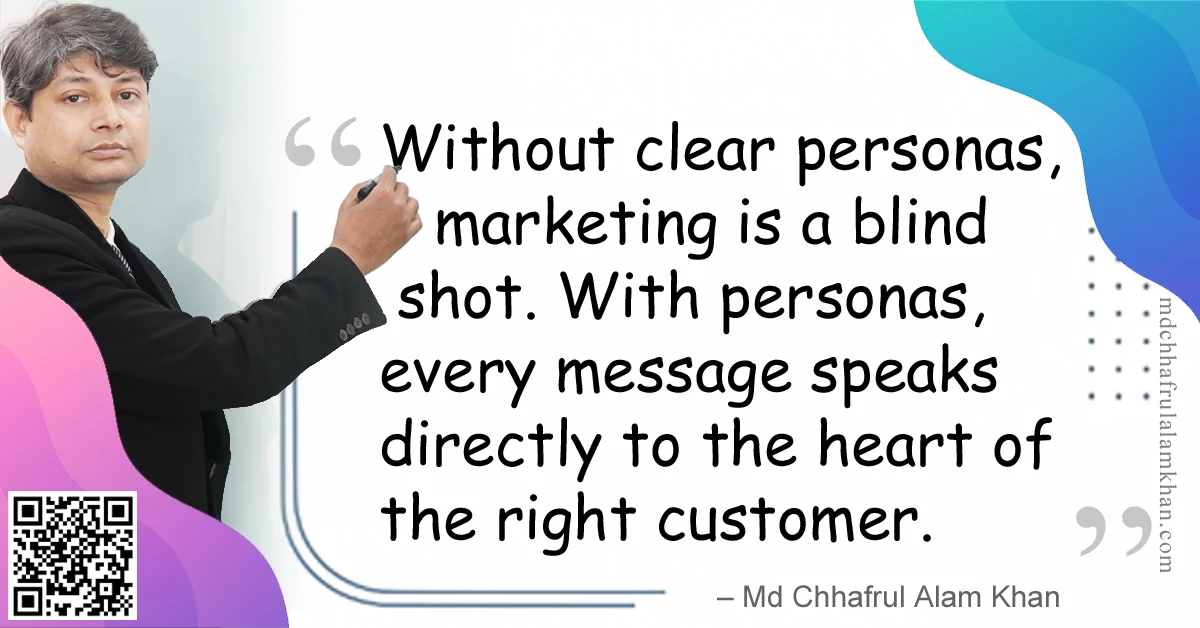
“Without clear personas, marketing is a blind shot. With personas, every message speaks directly to the heart of the right customer.”
– Md Chhafrul Alam Khan
Introduction
Every successful marketing strategy begins with understanding the audience. In Digital Marketing, this is achieved through two critical practices:
- Buyer Personas → fictional but research-based profiles that represent ideal customers.
- Segmentation → dividing the audience into groups based on demographics, behavior, interests, or needs.
Together, they ensure that campaigns are targeted, relevant, and effective.
🔎 What is a Buyer Persona?
A Buyer Persona is a semi-fictional representation of an ideal customer, built using research, data, and insights.
Purpose:
- Humanize the target audience
- Guide messaging, tone, and offers
- Improve alignment across marketing, sales, and product teams
Key Components of a Persona:
- Name & Background (fictional but relatable)
- Demographics (age, gender, income, education)
- Goals & Motivations
- Pain Points & Challenges
- Preferred Channels (social media, email, search, forums)
- Buying Behavior & Decision Factors
🧩 Example of a Buyer Persona
Persona Name: Fitness-Focused Fiona
- Age: 28
- Job: Marketing Specialist
- Location: Urban, metropolitan city
- Goals: Stay healthy, save time, maintain work-life balance
- Pain Points: Expensive gyms, lack of time, overwhelming fitness advice
- Preferred Channels: Instagram, YouTube, fitness apps
- Buying Behavior: Looks for affordable, convenient, and trustworthy fitness products
🔎 What is Market Segmentation?
Segmentation is the process of dividing the overall market into smaller, defined groups of customers with similar characteristics.
Types of Segmentation:
- Demographic: Age, gender, income, education, family size
- Geographic: Location, climate, population density
- Psychographic: Lifestyle, values, personality, interests
- Behavioral: Buying habits, product usage, loyalty, triggers
- Technographic: Devices, platforms, apps, technology adoption
📊 Comparison: Buyer Personas vs. Segmentation
| Aspect | Buyer Personas | Segmentation |
|---|---|---|
| Definition | Fictional profile representing ideal customer | Grouping customers into categories |
| Focus | Individualized, human-like model | Broader audience divisions |
| Detail Level | Deep insights: goals, pain points, channels | General traits: demographics, behaviors |
| Use Case | Crafting messages, tone, UX | Market targeting, campaign design |
| Output | “Fitness-Focused Fiona” (detailed persona) | “Women aged 25–34 in urban areas” (segment) |
🎯 Why Personas & Segmentation Matter in Digital Marketing
- Improve message relevance → talking directly to customer needs.
- Reduce wasted spend → targeting only relevant segments.
- Enhance content creation → blogs, ads, and emails aligned to personas.
- Support personalization → dynamic content & AI-driven recommendations.
- Strengthen customer experience → smoother journeys based on expectations.
🛠️ Tools for Personas & Segmentation
- Analytics: Google Analytics 4, Adobe Analytics
- Surveys & Feedback: SurveyMonkey, Typeform
- Social Insights: Facebook Audience Insights, LinkedIn Analytics
- CRM Data: HubSpot, Salesforce, Zoho
- AI Tools: ChatGPT (for persona development), predictive analytics platforms
❓ Frequently Asked Questions
Q1: How many buyer personas should a business have?
Most businesses need 3–5 core personas. Too many creates complexity without focus.
Q2: Are personas only for B2C?
No. B2B companies also use personas, often focusing on decision-makers and influencers.
Q3: What is the difference between a persona and a target audience?
Target audience = broad group. Persona = a specific, humanized example from that group.
Q4: Can AI help in building personas?
Yes — AI can analyze behavioral patterns, predict preferences, and generate persona models.
✨ Final Thoughts
Buyer Personas and Segmentation are the cornerstones of audience-centered marketing.
- Segmentation divides the market into groups.
- Personas bring those groups to life as relatable individuals.
“When marketing speaks to the right persona within the right segment, it stops being noise and becomes meaningful communication.”
– Md Chhafrul Alam Khan
Want to build accurate buyer personas and precise audience segments?
👉 Work with me to create data-driven personas and segmentation strategies for your brand.
Boost Your Knowledge & Skills 🚀
Master SEO from Beginner to Expert with our Free Online Self-Learning Course on SEO Mastery.
You might like↴
- Content Creation Checklist (CCC)
- SEO Encyclopedia
- What Is SEO – Search Engine Optimization? [A Comprehensive Guide]
- How to Become an SEO Expert? A Step-by-Step Guide
- SEO Starter Guide: From Web Whispers to Search Engine Screams
- On-Page SEO Overview
- Title Tag Optimization
- Meta Description Optimization
- Meta Robots Tag Optimization
- Canonical URL Optimization
- Viewport Meta Tag Optimization
- Heading Tag H1 Optimization
- Heading Tags H2–H6 Optimization
- Heading Structure Best Practices
- Keyword Targeting in Content
- Content Structure & Readability
- Content Depth & Word Count
- Multimedia Optimization
- Content Freshness & Updates
- Internal Link Structure
- Anchor Text Optimization
- Fixing Orphan Pages
- SEO-Friendly URL Structure
- URL Parameters & Tracking Codes
- Image File Naming for SEO
- Image Compression & Formats
- Image Alt Text & Title Attributes
- Schema Markup Overview
- Common Schema Types
- Testing & Validating Schema
- Outbound Link Quality & Relevance
- Nofollow, Sponsored & UGC Attributes
- Core Web Vitals Optimization
- Mobile Friendliness
- Accessibility Standards for SEO
- Robots Meta Tag Usage
- Hreflang Implementation
- Manual On-Page SEO Audit Checklist
- On-Page SEO Tools & Software
- Competitor On-Page SEO Analysis
- Technical SEO
- Meta Charset Tag Optimization
- Pagination SEO
- Google Search Algorithm
- The future of SEO in a ChatGPT-dominated world
- SEO Mastery: Complete Course Content
- Lesson 01: What is SEO and Why Does It Matter?
- Lesson 02: Keyword Research Made Simple
- Lesson 03: On-Page SEO Basics
- Lesson 04: Technical SEO