
📖 Digital Marketing Encyclopedia – Chapter 7
Branding, Positioning & Messaging

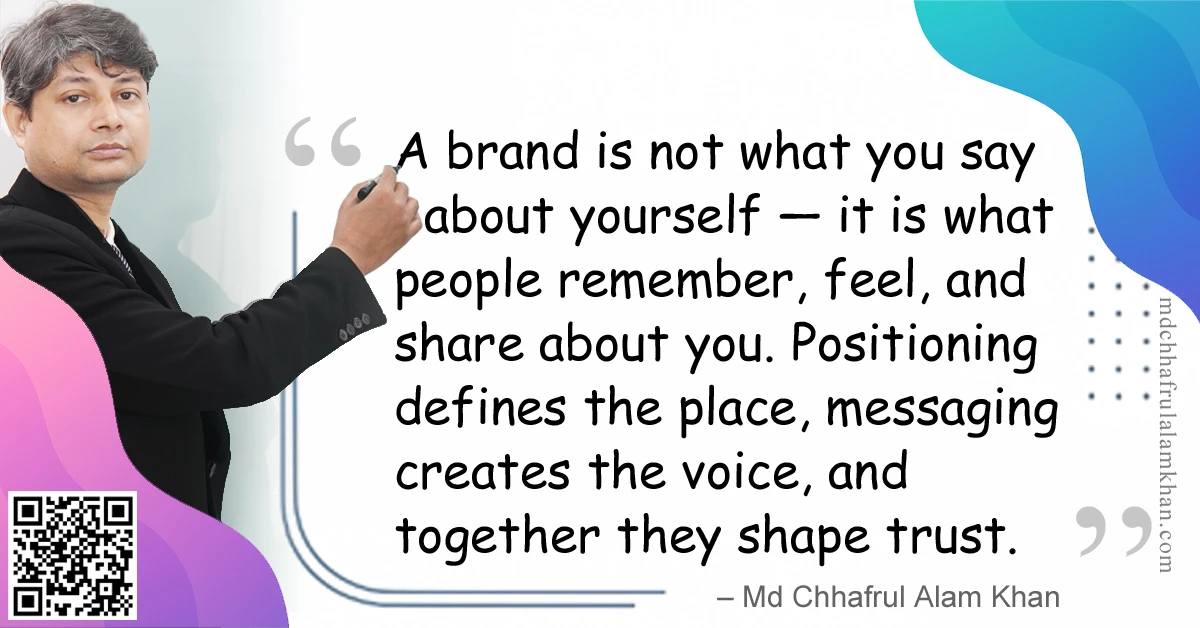
“A brand is not what you say about yourself — it is what people remember, feel, and share about you. Positioning defines the place, messaging creates the voice, and together they shape trust.”
– Md Chhafrul Alam Khan
Introduction
In the digital age, branding, positioning, and messaging are not just marketing elements — they are the soul of a business.
- Branding builds recognition and identity.
- Positioning defines how a brand is perceived compared to competitors.
- Messaging communicates the brand’s promise in words that resonate with the audience.
Together, they create a cohesive digital presence that inspires trust and loyalty.
🔎 What is Branding?
Branding is the process of creating a unique identity for a business, product, or individual.
Core Elements of Branding:
- Name & Logo – The visual anchor of the brand.
- Color Palette & Design – Creates consistency across platforms.
- Voice & Tone – Defines communication style.
- Values & Mission – Express the “why” behind the brand.
- Customer Experience – How people feel in every interaction.
Purpose: To build recognition, trust, and emotional connection.
🧩 What is Positioning?
Positioning defines the space your brand occupies in the market and in the customer’s mind.
Examples:
- Volvo → “Safety-first cars”
- Apple → “Innovative design & premium lifestyle”
- Nike → “Performance and empowerment”
Key Aspects of Positioning:
- Target Audience – Who are you serving?
- Unique Value Proposition (UVP) – What makes you different?
- Competitive Differentiation – Why should people choose you?
- Market Category – Where do you fit?
Purpose: To ensure the brand is clear, distinct, and memorable.
📝 What is Messaging?
Messaging is the language used to communicate the brand’s value, story, and positioning.
Types of Messaging:
- Brand Storytelling: The narrative behind the company.
- Value Propositions: Why your solution is the best choice.
- Taglines & Slogans: Memorable phrases (e.g., Nike – “Just Do It”).
- Content Messaging: Blogs, ads, social posts, emails.
- Tone of Voice: Friendly, authoritative, playful, or professional.
Purpose: To create a consistent voice that resonates with customers across all touchpoints.
📊 Branding vs. Positioning vs. Messaging
| Aspect | Branding | Positioning | Messaging |
|---|---|---|---|
| Definition | Identity & image | Market perception & differentiation | Language & communication |
| Focus | Visuals, values, experience | Space in customer’s mind | Words, storytelling, tone |
| Output | Logo, design, brand guidelines | UVP, differentiation | Taglines, campaigns, content |
| Purpose | Recognition & trust | Clarity & uniqueness | Resonance & persuasion |
🎯 Why Branding, Positioning & Messaging Matter
- Consistency → Ensures a unified identity across platforms.
- Trust → Builds credibility with customers and partners.
- Differentiation → Helps stand out in crowded markets.
- Emotional Connection → Creates loyalty beyond products.
- Conversion → Clear messaging drives actions.
🛠️ Tools for Branding & Messaging
- Design: Canva, Adobe Creative Cloud, Figma
- Messaging: Jasper, ChatGPT, Grammarly
- Brand Management: Frontify, Brandfolder
- Research: SurveyMonkey, SEMrush Market Explorer
- Testing: A/B testing platforms for messaging impact
❓ Frequently Asked Questions
Q1: Is branding only about logos and colors?
No. Branding includes values, voice, and customer experiences.
Q2: Can small businesses build strong branding?
Yes — even with limited budgets, consistent visuals and authentic messaging create powerful brands.
Q3: How often should positioning be updated?
When market conditions, competitors, or customer expectations shift significantly.
Q4: Why is messaging critical in Digital Marketing?
Because in a noisy digital world, clear and consistent messaging ensures your voice is heard and remembered.
✨ Final Thoughts
Branding, positioning, and messaging are the core pillars of identity and communication.
- Branding creates recognition and trust.
- Positioning defines market uniqueness.
- Messaging gives the brand its voice.
“In Digital Marketing, the brands that succeed are those that show up consistently, differentiate clearly, and speak with a voice that resonates deeply.”
– Md Chhafrul Alam Khan
Want to refine your brand identity, sharpen your positioning, and perfect your messaging?
👉 Work with me to build a digital presence that inspires trust and growth.
Boost Your Knowledge & Skills 🚀
Master SEO from Beginner to Expert with our Free Online Self-Learning Course on SEO Mastery.
You might like↴
- Content Creation Checklist (CCC)
- SEO Encyclopedia
- What Is SEO – Search Engine Optimization? [A Comprehensive Guide]
- How to Become an SEO Expert? A Step-by-Step Guide
- SEO Starter Guide: From Web Whispers to Search Engine Screams
- On-Page SEO Overview
- Title Tag Optimization
- Meta Description Optimization
- Meta Robots Tag Optimization
- Canonical URL Optimization
- Viewport Meta Tag Optimization
- Heading Tag H1 Optimization
- Heading Tags H2–H6 Optimization
- Heading Structure Best Practices
- Keyword Targeting in Content
- Content Structure & Readability
- Content Depth & Word Count
- Multimedia Optimization
- Content Freshness & Updates
- Internal Link Structure
- Anchor Text Optimization
- Fixing Orphan Pages
- SEO-Friendly URL Structure
- URL Parameters & Tracking Codes
- Image File Naming for SEO
- Image Compression & Formats
- Image Alt Text & Title Attributes
- Schema Markup Overview
- Common Schema Types
- Testing & Validating Schema
- Outbound Link Quality & Relevance
- Nofollow, Sponsored & UGC Attributes
- Core Web Vitals Optimization
- Mobile Friendliness
- Accessibility Standards for SEO
- Robots Meta Tag Usage
- Hreflang Implementation
- Manual On-Page SEO Audit Checklist
- On-Page SEO Tools & Software
- Competitor On-Page SEO Analysis
- Technical SEO
- Meta Charset Tag Optimization
- Pagination SEO
- Google Search Algorithm
- The future of SEO in a ChatGPT-dominated world
- SEO Mastery: Complete Course Content
- Lesson 01: What is SEO and Why Does It Matter?
- Lesson 02: Keyword Research Made Simple
- Lesson 03: On-Page SEO Basics
- Lesson 04: Technical SEO